 EN
EN

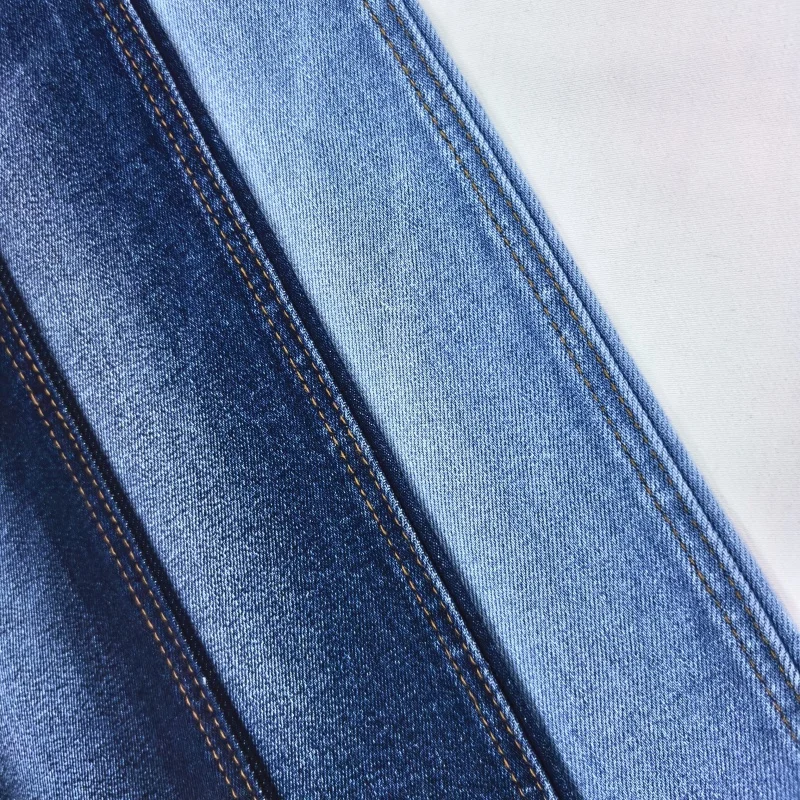
Fundamental Fabric Categories: Woven, Knit, and Nonwoven
Fabric materials are engineered from fibers or yarns and fall into three foundational categories—woven, knit, and nonwoven—that dictate mechanical behavior, production efficiency, and end-use suitability.
Woven fabrics are created by interlacing two sets of yarns—warp (lengthwise) and weft (crosswise)—at right angles on a loom. This orthogonal structure delivers high dimensional stability, tensile strength, and low elongation, making wovens ideal for industrial belting, filtration media, and protective outerwear.
Knit fabrics form through interlocking loops of yarn, offering superior elasticity, drape, and comfort. Weft knitting uses a single yarn fed horizontally to create versatile, stretchy structures; warp knitting employs multiple parallel yarns in vertical chains, enabling greater design complexity and dimensional control. Knits dominate applications where stretch, recovery, and conformability are critical—including medical compression garments, automotive seat covers, and performance sportswear.
Nonwoven fabrics bypass yarn formation entirely: fibers are bonded mechanically (e.g., needle-punching), thermally (e.g., hot-rolling), or chemically into a cohesive web or sheet. This process enables rapid, cost-efficient production ideal for high-volume, single-use applications—such as surgical gowns, disinfectant wipes, and geotextiles. Their structural flexibility supports custom engineering for specific barrier, absorption, or reinforcement functions.
Understanding these core architectures is the essential first step in industrial fabric selection, as each presents distinct trade-offs in strength, breathability, stretch, and manufacturing scalability.
Key Physical and Chemical Properties That Define Fabric Performance
Tensile Strength and Durability
Tensile strength—the force required to break a fabric under tension—is a primary indicator of durability in industrial settings. It depends on fiber type (e.g., high-tenacity polyester outperforms cotton in load-bearing contexts), yarn twist and linear density, and structural density (e.g., tight weaves increase resistance to pull-through). Elongation at break complements this metric, revealing how much a fabric can stretch before failure—a critical factor in dynamic applications like safety harnesses or elasticized medical devices. Selecting materials with balanced tensile strength and controlled elongation ensures reliable performance and extended service life under repeated stress.
Moisture Management and Breathability
Effective moisture management keeps wearers dry by moving sweat away from the skin via capillary action, diffusion, or evaporation. Breathability—the rate at which water vapor passes through the fabric—is influenced by fiber hydrophilicity (e.g., treated polyester or lyocell), construction openness (knits generally exceed tight wovens), and finishing techniques (e.g., hydrophilic coatings or micro-perforations). For activewear, medical textiles, and outdoor gear, these properties directly affect thermal regulation, hygiene, and user compliance. Moisture vapor transmission rate (MVTR) testing provides an objective benchmark for comparing performance across material options.
Thermal Resistance and Flame Retardancy
Thermal resistance determines a fabric’s ability to insulate against heat or cold—critical for both environmental protection and energy efficiency. In protective applications, flame retardancy is non-negotiable. Inherently flame-resistant (IFR) fibers such as aramid, modacrylic, and polybenzimidazole (PBI) char rather than melt when exposed to flame, maintaining structural integrity longer than treated alternatives. While chemical flame-retardant finishes can be applied to natural fibers like cotton, they may degrade over time or with laundering. The Limiting Oxygen Index (LOI)—the minimum oxygen concentration required to sustain combustion—is a standardized measure used to compare flammability across materials. Compliance with industry-specific standards (e.g., NFPA 2112 for flash fire, EN ISO 11612 for heat protection) remains essential for firefighter gear, industrial workwear, and automotive interiors.
Fabric Selection Criteria for B2B Industrial Buyers
Matching Fabric Specifications to End-Use Requirements
Selecting the right fabric begins with aligning technical specifications to functional demands—not aesthetics or legacy sourcing habits. Industrial protective apparel requires high tensile strength, flame retardancy, and abrasion resistance; athletic wear prioritizes moisture wicking, breathability, and controlled stretch; filtration media demand precise pore size distribution and chemical compatibility. A disciplined approach—defining weight (g/m²), stretch recovery, tear strength, UV resistance, and finish durability—reduces sampling iterations and costly rework. Detailed tech packs, including test method references (e.g., ASTM D5034 for tensile strength, ISO 15496 for MVTR), ensure suppliers deliver consistent, verifiable performance—from sterile surgical drapes to load-rated lifting slings.
Supplier Qualifications and Certifications (e.g., OEKO-TEX®, ISO)
Supplier verification is foundational to risk-mitigated procurement. Certifications serve as third-party validation of safety, quality, and sustainability claims. OEKO-TEX® Standard 100 confirms absence of harmful substances at every processing stage; ISO 9001 verifies a supplier’s documented, auditable quality management system; and ISO 14001 signals environmental accountability. A 2023 industry survey found that 78% of procurement managers require such credentials to meet internal compliance thresholds and regulatory obligations—including REACH, CPSIA, and regional textile labeling laws. Request full, unexpired certificates—and supporting audit reports—before finalizing contracts. This diligence prevents field failures, recalls, and reputational exposure while reinforcing supply chain transparency.
Scalability, Lead Times, and Customization Capabilities
Industrial buyers must assess whether a supplier can scale production without compromising consistency. Evaluate minimum order quantities (MOQs), typical lead times for standard vs. custom runs, and flexibility across finishes (e.g., antimicrobial, anti-static), colors (batch-to-batch color matching), and labeling (direct-to-fabric printing or woven labels). Suppliers with modular dyeing and finishing lines, integrated ERP systems, and agile capacity planning respond more effectively to seasonal demand shifts or urgent redesigns. According to a 2024 supply chain report, 65% of sourcing delays stem from mismatched capacity planning—not logistics bottlenecks. Prioritize partners offering real-time production visibility, transparent calendars, and contractual flexibility for last-minute specification adjustments—securing both reliability and speed-to-market.
Emerging Innovations in Sustainable and Smart Fabric Technologies
The textile sector is undergoing structural transformation driven by two converging imperatives: circularity and intelligence. These are no longer experimental concepts—they’re operational realities reshaping industrial textile design, sourcing, and performance expectations.
Recycled Fibers and Circular Manufacturing Practices
Closed-loop manufacturing is now commercially viable. Recycled polyester—primarily sourced from post-consumer PET bottles—accounted for 15% of global polyester fiber production in 2022 (Textile Exchange). More advanced chemical recycling methods, such as depolymerization and enzymatic breakdown, regenerate virgin-quality polyester or nylon from blended or contaminated textile waste—enabling true fiber-to-fiber regeneration without performance loss. Lifecycle assessments show these circular processes reduce carbon emissions by up to 40% versus conventional production. For industrial buyers, specifying certified recycled content (e.g., GRS or RCS) and verifying traceability through blockchain-enabled platforms has become standard practice—aligning environmental targets with functional reliability.
Conductive and Responsive Fabrics for IoT-Enabled Products
Conductive yarns (e.g., stainless steel–polyester hybrids), printed silver nanowire sensors, and stretchable microelectronics are embedding intelligence directly into fabric substrates. The global smart textiles market is projected to reach $15 billion by 2028, growing at a compound annual growth rate of over 25% (Grand View Research, 2023). In industrial use cases, these responsive fabrics monitor physiological metrics in healthcare uniforms, detect toxic gas exposure in refinery workwear, and dynamically adjust thermal insulation in extreme-environment gear. Unlike add-on electronics, embedded solutions maintain wash durability, ergonomic comfort, and mechanical integrity—delivering actionable data without compromising core textile functionality. For sectors ranging from defense to mining, this integration establishes new benchmarks in proactive worker safety and operational insight.
FAQ
What are the primary differences between woven, knit, and nonwoven fabrics?
Woven fabrics are made by interlacing warp and weft yarns at right angles, offering high dimensional stability and strength. Knit fabrics involve interlocking loops and provide stretch and comfort, while nonwoven fabrics are formed directly from fibers bonded mechanically, thermally, or chemically for single-use and high-volume applications.
How is tensile strength important for fabric performance?
Tensile strength determines how much force a fabric can withstand under tension, making it vital for durability in industrial applications like safety harnesses and medical devices.
What properties are essential for flame retardant fabrics?
Flame retardant fabrics require high thermal resistance and compliance with standards like NFPA 2112 and EN ISO 11612. Inherently flame-resistant fibers like aramid or treated natural fibers are commonly used.
Why is supplier certification important?
Certifications like OEKO-TEX® and ISO ensure that suppliers meet quality, safety, and sustainability standards, reducing risks in procurement and ensuring compliance with regulations.
What are the key innovations in smart and sustainable textiles?
Sustainable innovations include recycled fibers and circular manufacturing processes, while smart textiles incorporate conductive yarns and embedded microelectronics for IoT-enabled functionalities.