 EN
EN

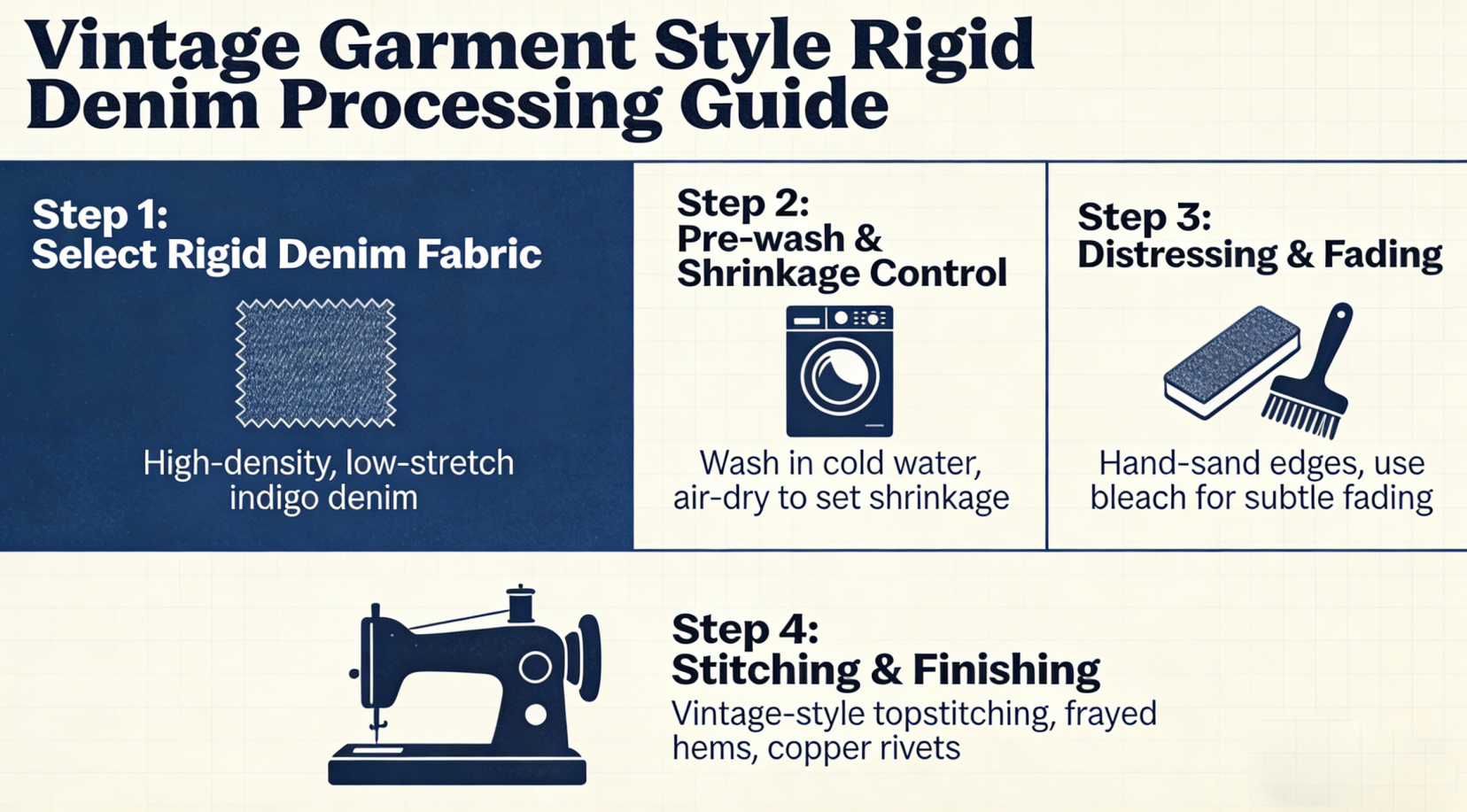
Γιατί ο σκληρός denim αποτελεί το βασικό «καμβά» για αυθεντικά βιντέζ αισθητικά
Η επιστήμη της μετανάστευσης της ινδικού και της τάσης των ινών: πώς ο μη πλυμένος σκληρός denim επιτρέπει ελεγχόμενη και χρονικά ακριβή ξεθώριαση
Οι πραγματικές βιντάζ αποχρώσεις ξεκινούν από μη πλυμένο, σκληρό μπαμπακερό υφασματικό υλικό ως βάση τους. Η πυκνή ύφανση του υφάσματος δημιουργεί φυσική τάση στις ίνες, η οποία ελέγχει τον τρόπο με τον οποίο κινείται η ινδικόχρωμη βαφή κατά τη φόρεση. Καθώς οι άνθρωποι κινούνται, η ινδικόχρωμη βαφή απομακρύνεται σταδιακά από τους νηματοειδείς σπείρες του στρώματος (warp) σε συγκεκριμένα σημεία, βάσει των περιοχών όπου συσσωρεύεται πίεση. Γι’ αυτό ακριβώς εμφανίζονται εκείνα τα έντονα μοτίβα μελισσοκομείου και οι γραμμές «μουστακιών» ακριβώς στις περιοχές όπου το σώμα μας κάνει φυσικά κάμψεις και εκτάσεις, αντί για τυχαίες θέσεις που θα μπορούσε να δημιουργήσει μια πλυντήριο. Σε σύγκριση με τις προπλυμένες επιλογές, αυτό το είδος μπαμπακερού υφάσματος διατηρεί αρχικά περίπου 40% περισσότερο μπλε χρώμα. Αυτή η επιπλέον ποσότητα χρωστικής προσφέρει στους εμπειρογνώμονες εργάτες μπαμπακερού υφάσματος ένα ουσιαστικό υλικό για να εργαστούν και να δημιουργήσουν αποχρώσεις μέσω πολλαπλών σταδίων, χρησιμοποιώντας παραδοσιακές μεθόδους που έχουν περαστεί από γενιά σε γενιά. Όταν οι τεχνίτες εφαρμόζουν ελεγχόμενη τριβή και καθορίζουν τα σημεία τάσης, στην πραγματικότητα μιμούνται το αποτέλεσμα που προκύπτει μετά από χρόνια κανονικής χρήσης. Δεδομένου ότι το ύφασμα αλλάζει από την αρχική του κατάσταση, κάθε αποχρωματισμένο ενδύματα έχει μοναδική εμφάνιση, αλλά παρ’ όλα αυτά διηγείται μια πιστεύτικη ιστορία πραγματικής φόρεσης και φθοράς. Υπάρχει κάτι εντυπωσιακό στον τρόπο με τον οποίο η δομή των ινών αλληλεπιδρά με τη χημεία της βαφής, γι’ αυτό και οι σοβαροί συλλέκτες και οι τεχνίτες δεν μπορούν να κάνουν χωρίς το σκληρό μπαμπακερό υφάσμα, εάν επιθυμούν να αναπαράγουν αυθεντικά τα κλασικά στυλ.
Φυσικό τζιν σε σύγκριση με προπλυμένο: διαφορές απόδοσης όσον αφορά την αντίδραση στην τριβή, τη συρρίκνωση και τη διαστασιακή σταθερότητα κατά την επεξεργασία vintage
Το ακατέργαστο τζιν υπερτερεί του προπλυμένου σε τρεις κρίσιμες διαστάσεις κατά την επεξεργασία ενδυμάτων vintage:
| Χαρακτηριστικό | Σκληρό δενίμ | Προπλυμένο τζιν |
|---|---|---|
| Αντίδραση στην τριβή | Φθείρεται ομοιόμορφα χωρίς σχηματισμό μπαλακιών | Αδυναμεί γρήγορα, προκαλώντας φραγκάρισμα |
| Έλεγχος συρρίκνωσης | Προβλέψιμη μείωση 8–10% | Ελάχιστη επιπλέον συρρίκνωση |
| Διαστατική Σταθερότητα | Διατηρεί το σχήμα του μετά το αρχικό πλύσιμο | Χάνει τη δομή του κατά την επεξεργασία |
Το παχύ, ακατέργαστο υλικό αντέχει σε όλα τα είδη φυσικής καταπόνησης χωρίς να χάνει εκείνα τα οξέα, μορφοποιημένα από το σώμα σημάδια φθοράς που φαίνονται τόσο αυθεντικά. Όταν συρρικνώνεται με ακρίβεια κατά την πρώτη επεξεργασία, δημιουργεί μια εφαρμογή ακριβώς κατάλληλη για την επίτευξη εκείνων των κλασικών σιλουέτ από διαφορετικές δεκαετίες — σκεφτείτε τις υψηλές μέσες της δεκαετίας του 1940 ή τις ευρείες λεγκίνες που ήταν δημοφιλείς τη δεκαετία του 1970. Τα συνηθισμένα πλυμένα τζιν δεν αντέχουν όμως με τον ίδιο τρόπο· τείνουν να ξεθωριάζουν σε περίεργα σημεία και να κρέμονται ακανόνιστα, επειδή έχουν ήδη χάσει τη δομή τους. Η σκληρότητα, στην πραγματικότητα, βοηθά στη δημιουργία εκείνων των φυσικών, μορφοποιημένων ρυτίδων κατά μήκος των μηρών, όπου λυγίζουμε, καθώς και των κατάλληλων διπλωμάτων γύρω από τα γόνατα, τα οποία ακολουθούν τον τρόπο λειτουργίας των αρθρώσεών μας, αντί για κάποια τυχαία ρύθμιση εργοστασίου.
Βασικές τεχνικές πλύσιματος που διατηρούν τη σκληρότητα ενώ προκαλούν την «παλιά» εξέλιξη
Βελτιστοποίηση της πλύσης με ενζύμων για σκληρό τζιν: pH, θερμοκρασία και χρόνος παραμονής για την επίτευξη μελισσοκομείου χωρίς αποτρίχωση ή μείωση της αντοχής
Η πλύση με ενζύματα αλλάζει το σκληρό δενίμ κατά τρόπο που διατηρεί την ποιότητα του υφάσματος χωρίς να θυσιάζει κάτι σημαντικό. Τα ενζύματα κυτταράσης λειτουργούν καλύτερα όταν το pH παραμένει μεταξύ περίπου 4,8 και 5,2. Αυτό το εύρος διατηρεί σταθερό το χρώμα της ινδικού, ενώ διασπά μόνο τις επιφανειακές ίνες που επιθυμούμε να τροποποιήσουμε. Οι θερμοκρασίες μεταξύ 50 και 55 βαθμών Κελσίου επιταχύνουν τις χημικές αντιδράσεις χωρίς να βλάπτουν το μετάξι. Συνήθως αφήνουμε τα ενδύματα να παραμείνουν για περίπου 20 έως 30 λεπτά, ώστε τα ένζυμα να μπορούν να στοχεύσουν εκείνα τα σημεία τάσης όπου τα τζιν φθείρονται φυσικά ταχύτερα: οι περιοχές των γονάτων, των τσέπων και των διπλωμάτων στην περιοχή των γλουτών. Αυτό δημιουργεί εκείνα τα εντυπωσιακά μοτίβα μελισσοκομείου, αντί να κάνει τα πάντα να φαίνονται επίπεδα και ανενεργά. Διατηρώντας τον λόγο νερού προς ενδύματα κάτω του 8 προς 1 εξασφαλίζεται συνεκτικότητα των αποτελεσμάτων ανά παρτίδα. Δοκιμές δείχνουν ότι αυτά τα επεξεργασμένα τζιν διατηρούν σχεδόν όλη τους την αρχική αντοχή μετά την επεξεργασία, σύμφωνα με τις τυπικές βιομηχανικές δοκιμές.
Ακρίβεια λειτουργίας λέιζερ: προγραμματισμός ανατομικών μοτίβων φθοράς (whiskering, κάμψεις στα γόνατα) απευθείας σε σκληρό υφασματικό υλικό—δεν απαιτείται προηγούμενη χειροκίνητη σήμανση
Η διαδικασία λειτουργίας με λέιζερ απαλείφει την εικασία από την εξίσωση, δημιουργώντας ψηφιακούς χάρτες βασισμένους στον τρόπο με τον οποίο κινούνται πραγματικά τα ανθρώπινα σώματα. Όταν οι χειριστές εργάζονται με τρισδιάστατες σαρώσεις ενδυμάτων, ρυθμίζουν αυτούς τους λέιζερ CO₂ σε ισχύ περίπου 120 watt για να επισημάνουν τις περιοχές όπου τα ρούχα λυγίζουν και επεκτείνονται φυσικά. Σκεφτείτε, για παράδειγμα, τις «μουστάκιες» στο μηρό που συμπίπτουν με τις κινήσεις των ισχίων ή τις γραμμές στα γόνατα που ακολουθούν ακριβώς την κίνηση της γονατικής επιφάνειας κατά την καθημερινή φόρεση. Το επόμενο βήμα είναι πραγματικά εκπληκτικό: το ινδικό υλικό εξατμίζεται μέχρι και σε μικρότερες από ένα χιλιοστό διαστάσεις, χωρίς να πληγώνονται οι υφαντικές ίνες που βρίσκονται κάτω από αυτό. Αυτό σημαίνει ότι τα τζιν παραμένουν σκληρά και οι ραφές δεν υφίστανται ζημιά. Το μπαμπάκι έχει αυτή την εξαιρετική ιδιότητα να διατηρεί το σχήμα του όταν εκτίθεται σε λέιζερ, επιτρέποντας στους σχεδιαστές να επιτυγχάνουν εκπληκτική ακρίβεια λεπτομερειών σε διαστάσεις μικρότερες του χιλιοστού. Δεν χρειάζονται πλέον σημάδια με μολύβι, ούτε επαναληπτικές διορθώσεις. Οι χρόνοι επεξεργασίας μειώνονται κατά περίπου 70% και δεν υπάρχει καμία παραλλαγή μεταξύ των εργαζομένων, καθώς όλα ακολουθούν ακριβείς ανατομικούς προσανατολισμούς, αντί να βασίζονται απλώς σε αυτό που φαίνεται καλό σε μια πασαρέλα.
Στοχευμένες Μέθοδοι Φθοράς που Σέβονται την Αρχιτεκτονική του Ρουχισμού και την Ιστορία Χρήσης του
Προσομοίωση σημείων πίεσης: χρήση τρισδιάστατης σάρωσης ρουχισμού και βιομηχανικής απεικόνισης για την αυθεντική τοποθέτηση φθοράς (whiskering), διαγώνιων γραμμών (chevrons) και ζωνών υψηλής φθοράς (hot spots) σε σκληρό μπλε ντινιμ
Πραγματικά ανησυχητικό είναι το να κοιτάζεις τι συμβαίνει με τα ρούχα όταν τα φοράνε οι άνθρωποι στην πραγματικότητα, όχι μόνο πώς φαίνονται κρεμασμένα σε μια ράφι. Με την τεχνολογία 3D σάρωσης, μπορούμε τώρα να δούμε ακριβώς πού δημιουργείται τάση σε διάφορες θέσεις, όπως καθιστώντας, γονατίζοντας ή περπατώντας στην πόλη. Αυτές οι λεπτομερείς πληροφορίες συνδυάζονται με την ανάλυση κίνησης από πραγματικές μελέτες κίνησης, δημιουργώντας μοτίβα φθοράς που αντιστοιχούν σε συγκεκριμένες χρονικές περιόδους. Για παράδειγμα, τα τζιν της δεκαετίας του 1950 παρουσιάζουν εκείνες τις στενές γραμμές κατά μήκος των μηρών λόγω της λεπτής και ευθείας κοπής εκείνης της εποχής, ενώ οι στυλ της δεκαετίας του 1970 τείνουν να έχουν ευρύτερα μοτίβα «κεραυνού» λόγω των πιο χαλαρών κοπών τους. Οι ειδικοί γνωρίζουν ακριβώς πού να τρίψουν και να αμμοβολήσουν, βάσει αυτών των σημείων πίεσης που εντοπίζονται στο σκληρό, απλύτο μπαμπάκινο ύφασμα. Αυτό βοηθά στη δημιουργία εκείνων των καθαρών και μόνιμων αποχρωματισμών που δεν εξαφανίζονται μετά από ένα μόνο πλύσιμο. Επίσης, φροντίζουμε να μην υπερβούμε με τις τεχνικές βαφής με λευκαντικό. Παλιές φωτογραφίες και αρχεία μας βοηθούν να τοποθετήσουμε κάθε μικρό σημάδι με ακρίβεια, ώστε κάθε «μουστάκι» (whisker) να φαίνεται ότι προέρχεται από πραγματικές εμπειρίες ζωής και όχι απλώς από τυχαία ζημιά.
Τεχνικές ψεκασμού PP και χλωρίνης χαμηλής συγκέντρωσης: έλεγχος της τονικής βαθμίδωσης σε σκληρό δερμάτινο υφασματικό ενώ διατηρείται η εφελκυστική αντοχή και η ακεραιότητα των ραφών
Η χρήση ψεκασμού με υπερμαγγανικό κάλιο σε συνδυασμό με αραιωμένα διαλύματα ξεβαφτικού προσδίδει στο ύφασμα εκείνη την ελαφρώς ξεθωριασμένη, «ηλιόλουστη» εμφάνιση που όλοι μας αγαπάμε, διατηρώντας ωστόσο την επάρκεια της αντοχής του για να διαρκέσει. Όταν κάποιος ψεκάζει αερόγραφο PP σε περιεκτικότητα περίπου 3% ή λιγότερο, επιτυγχάνει εκείνες τις ευχάριστες βαθμιαίες αλλαγές χρώματος από το πάνω μέρος προς το κάτω, οι οποίες μοιάζουν ακριβώς με τις αλλαγές που συμβαίνουν φυσικά μετά από χρόνια έκθεσης στον ήλιο. Για τις αντιμετωπίσεις με υποχλωριούχο νάτριο σε συγκέντρωση περίπου 2%, η αφήσιμος χρόνος για όχι περισσότερο από 90 δευτερόλεπτα δημιουργεί εκείνες τις εντυπωσιακές υφές με μορφή κυψελών χωρίς να προκαλεί ζημιά στις ίδιες τις ίνες. Το εξαιρετικό σε και τις δύο μεθόδους είναι ότι παρακάμπτουν εντελώς οποιαδήποτε ορατά σημάδια ραφής, οπότε οι αρμοί παραμένουν ανέπαφοι — γεγονός που έχει μεγάλη σημασία όταν επιδιώκεται αυθεντική «βιντέζ» αίσθηση. Πριν όμως εφαρμοστεί οποιαδήποτε μέθοδος, οι περισσότεροι επαγγελματίες εκτελούν πρώτα δοκιμές σε μικρά δείγματα για να διαπιστώσουν την αντίδραση διαφορετικών παρτίδων, βάσει των επιπέδων ινδικού και της κατασκευής των νημάτων. Αυτό βοηθά να αποφευχθεί η υπερβολική εφαρμογή της διαδικασίας επεξεργασίας. Εργαστηριακές δοκιμές έχουν δείξει ότι αυτές οι μέθοδοι διατηρούν πραγματικά από 90 έως 95 τοις εκατό της αρχικής αντοχής του υφάσματος, αποδεικνύοντας σαφώς ότι η επίτευξη ομορφιάς δεν σημαίνει υποχώρηση στην ανθεκτικότητα.
Συχνές Ερωτήσεις
Τι είναι το σκληρό denim;
Το σκληρό denim είναι ένα μη πλυμένο, σκληρό ύφασμα denim που επιτρέπει αυθεντικά μοτίβα θαμπώματος καθώς φοριέται.
Πώς διαφέρει το σκληρό denim από το προπλυμένο denim;
Το σκληρό denim διατηρεί τη δομή του και επιτρέπει φυσικά θαμπώματα με την πάροδο του χρόνου, ενώ το προπλυμένο denim συχνά χάνει το σχήμα του και μπορεί να θαμπώνει με απρόβλεπτο τρόπο.
Τι καθιστά το σκληρό denim ιδανικό για βιντάζ στιλ;
Η ικανότητα του σκληρού denim να διατηρεί το σχήμα του και τα δομημένα μοτίβα θαμπώματός του το καθιστούν τέλειο για την επίτευξη αυθεντικών βιντάζ εμφανίσεων.
Ποιες είναι οι βασικές τεχνικές πλύσης για σκληρό denim;
Οι βασικές τεχνικές περιλαμβάνουν πλύση με ενζύματα, λέιζερ επεξεργασία και εφαρμογή χλωρίνης χαμηλής συγκέντρωσης για ακριβή και αυθεντικά θαμπώματα.
Πώς δημιουργούν οι τεχνίτες ρεαλιστική φθορά σε σκληρό denim;
Οι τεχνίτες χρησιμοποιούν τεχνικές όπως η προσομοίωση σημείων πίεσης και η βιομηχανική χαρτογράφηση για να αναπαράγουν αυθεντικά τα μοτίβα φθοράς.
Περιεχόμενα
-
Γιατί ο σκληρός denim αποτελεί το βασικό «καμβά» για αυθεντικά βιντέζ αισθητικά
- Η επιστήμη της μετανάστευσης της ινδικού και της τάσης των ινών: πώς ο μη πλυμένος σκληρός denim επιτρέπει ελεγχόμενη και χρονικά ακριβή ξεθώριαση
- Φυσικό τζιν σε σύγκριση με προπλυμένο: διαφορές απόδοσης όσον αφορά την αντίδραση στην τριβή, τη συρρίκνωση και τη διαστασιακή σταθερότητα κατά την επεξεργασία vintage
-
Βασικές τεχνικές πλύσιματος που διατηρούν τη σκληρότητα ενώ προκαλούν την «παλιά» εξέλιξη
- Βελτιστοποίηση της πλύσης με ενζύμων για σκληρό τζιν: pH, θερμοκρασία και χρόνος παραμονής για την επίτευξη μελισσοκομείου χωρίς αποτρίχωση ή μείωση της αντοχής
- Ακρίβεια λειτουργίας λέιζερ: προγραμματισμός ανατομικών μοτίβων φθοράς (whiskering, κάμψεις στα γόνατα) απευθείας σε σκληρό υφασματικό υλικό—δεν απαιτείται προηγούμενη χειροκίνητη σήμανση
-
Στοχευμένες Μέθοδοι Φθοράς που Σέβονται την Αρχιτεκτονική του Ρουχισμού και την Ιστορία Χρήσης του
- Προσομοίωση σημείων πίεσης: χρήση τρισδιάστατης σάρωσης ρουχισμού και βιομηχανικής απεικόνισης για την αυθεντική τοποθέτηση φθοράς (whiskering), διαγώνιων γραμμών (chevrons) και ζωνών υψηλής φθοράς (hot spots) σε σκληρό μπλε ντινιμ
- Τεχνικές ψεκασμού PP και χλωρίνης χαμηλής συγκέντρωσης: έλεγχος της τονικής βαθμίδωσης σε σκληρό δερμάτινο υφασματικό ενώ διατηρείται η εφελκυστική αντοχή και η ακεραιότητα των ραφών
- Συχνές Ερωτήσεις