 EN
EN

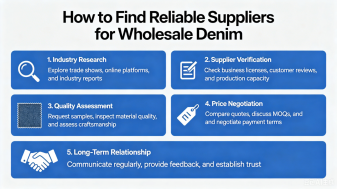
Valutare l’esperienza del fornitore e le sue capacità produttive per il denim all'ingrosso
Valutazione della qualità del denim, dell’approvvigionamento dei tessuti e della coerenza dei trattamenti di lavaggio/finitura
Iniziare esaminando attentamente gli elementi fondamentali che definiscono un prodotto premium denim all'ingrosso . La composizione del tessuto è fondamentale: privilegiare fornitori che utilizzano cotone di alta qualità (idealmente almeno il 98%) con rapporti precisi di elastane (2–4%) per bilanciare durata e comfort. Il peso del tessuto ne determina l’uso finale: il denim da 12 a 14 once è adatto per jeans da indossare tutto l’anno, mentre quello da 16 once o superiore è ideale per capi outerwear e da lavoro. I principali parametri prestazionali includono il recupero dell’elasticità (≥90% dopo 5.000 cicli) e il controllo del restringimento (<3% dopo il lavaggio); richiedere relazioni di prova del produttore o dati di laboratori terzi per verificare tali parametri prima di procedere con l’ordine.
La lavatura e la finitura sono elementi che distinguono i fornitori affidabili dalla massa. Richiedere campioni di lavaggio pre-produzione su 5–10 paia pilota per valutare la resistenza al colore, l’uniformità dello sbiadimento e l’integrità delle cuciture. Per tecniche speciali come il lavaggio enzimatico o l’incisione laser, verificare sia la capacità degli impianti sia l’esperienza del personale tecnico, non solo le dichiarazioni rilasciate. Un solido protocollo di controllo qualità (QA) deve includere:
- Approvazione pre-produzione: Campioni di tintura approvati in condizioni di luce diurna D65 e sotto l’illuminazione del punto vendita
- Controlli in linea: Verifica a metà produzione della tensione dei punti, dell’allineamento delle tasche e del posizionamento delle parti metalliche
- Ispezione finale: Campionamento AQL 2,5 ogni 100 unità, effettuato secondo lo standard di difetti definito dal vostro marchio
Conferma della capacità produttiva scalabile e di MOQ flessibili per ordini all’ingrosso di jeans
Una produzione scalabile previene i colli di bottiglia stagionali e tutela i margini. Privilegiare fabbriche dotate di telai moderni senza navetta: questi garantiscono una resa giornaliera in metri lineari fino al 30% superiore rispetto ai vecchi sistemi a getto d'aria o a proiettile. Verificare incrociata la capacità dichiarata rispetto al volume effettivo degli ordini in corso: i fornitori di fascia media gestiscono tipicamente da 50.000 a 75.000 unità mensili, mentre i partner su larga scala superano le 100.000 unità. Evitare una dipendenza eccessiva da dati auto-dichiarati: richiedere sintesi recenti di audit effettuati in fabbrica o riferimenti clienti anonimizzati per convalidare le affermazioni relative alla capacità produttiva.
| Parametro produttivo | Fornitore piccolo | Fornitore di fascia media | Fornitore su larga scala |
|---|---|---|---|
| Capacità mensile | ≤ 20.000 unità | 50.000–75.000 unità | ≥ 100.000 unità |
| Tempi di consegna (giorni) | 14–21 | 10–14 | 7–10 |
| Tasso di consegna puntuale | 85% | 92% | 95% |
La flessibilità del MOQ rimane essenziale, in particolare per i marchi emergenti. Privilegiare partner che offrono MOQ di 100–500 unità per modello senza aumenti ingiustificati del prezzo unitario. Per ordini superiori a 5.000 unità, negoziare sconti progressivi legati alla capacità effettivamente confermata, non a una scala teorica. Non finalizzare mai i termini senza aver verificato l'affidabilità dei tempi di consegna tramite almeno due registrazioni di spedizioni recenti.
Verificare l'affidabilità mediante una rigorosa due diligence e una validazione della qualità
Audit in loco, referenze clienti verificate e certificazioni di terze parti
Fare affidamento esclusivamente sulla documentazione fornita dal fornitore comporta dei rischi. Gli audit in loco forniscono informazioni insostituibili sugli standard degli impianti, sulla disciplina dei flussi di lavoro e sulla cultura della conformità, rivelando problemi che nessun tour video è in grado di cogliere, come un’illuminazione non uniforme nelle zone di ispezione o una taratura obsoleta della pressa a vapore. I riferimenti verificati di clienti (preferibilmente di marchi con volumi e aspettative qualitative comparabili) offrono un feedback sincero sulla tempestività di risposta, sulla rapidità di risoluzione dei problemi e sulla coerenza delle prestazioni nel corso delle diverse stagioni. Le certificazioni di terze parti fungono da punti di riferimento oggettivi: la norma ISO 9001 attesta un sistema strutturato di gestione della qualità; lo standard OEKO-TEX 100 conferma la conformità alle restrizioni sulle sostanze nocive; le certificazioni WRAP o BSCI indicano un rigoroso impegno etico nelle operazioni. Utilizzare questa triade — e non un singolo elemento preso isolatamente — per formulare una valutazione completa e basata su prove concrete.
Controllo qualità end-to-end: dai campioni pre-produzione ai test su lotti in serie
Un vero controllo qualità inizia molto prima del taglio del tessuto. Parti da campioni pre-produzione valutati fianco a fianco rispetto alla tua scheda tecnica fisica, per confermare la sensazione al tatto, la caduta e la profondità della tintura sotto una luce costante. Durante la produzione, ispezioni in linea individuano tempestivamente eventuali scostamenti: asole per cinture non allineate, punti di pesca saltati o bar tack non uniformi sono molto meno costosi da correggere durante la produzione che durante l’audit finale. I test finali su larga scala devono andare oltre i semplici controlli visivi: verifica la resistenza delle cuciture (≥12 kg di forza di trazione), la stabilità dimensionale (restringimento ≤2,5% in larghezza/lunghezza) e la resistenza all’abrasione (Martindale ≥15.000 cicli per i modelli principali). Questo approccio a ciclo completo riduce al minimo resi costosi, preserva il valore del marchio e costruisce una fiducia ripetibile per ogni lancio stagionale.
Selezionare e ottimizzare i canali di approvvigionamento per l’acquisto all’ingrosso di denim
Sfruttare le fiere del denim rispetto alle piattaforme B2B verificate per identificare fornitori affidabili di denim all’ingrosso
Allinea il tuo canale di approvvigionamento allo stadio del tuo marchio e alle tue priorità strategiche. Le fiere specializzate nel settore del denim—tra cui INTERTEXTILE SHANGHAI e Kingpins—offrono una valutazione tattile senza pari: puoi esaminare manualmente la mano del tessuto, il suo peso e la profondità della tintura su decine di filatoi e convertitori in un’unica sede, osservando contemporaneamente come i fornitori presentano le proprie competenze tecniche e rispondono a domande dettagliate. Queste interazioni costruiscono fiducia più rapidamente rispetto agli scambi digitali da soli. Al contrario, piattaforme B2B verificate (ad esempio Kompass, Sourcemap o portali settoriali specifici come Denim Drive) offrono un accesso efficiente a produttori globali pre-selezionati—con profili produttivi verificati, recensioni autentiche di clienti reali e storici documentati di conformità. I buyer più efficaci adottano una strategia ibrida: utilizzano le piattaforme per selezionare una shortlist di 3–5 candidati tecnicamente qualificati, quindi li incontrano di persona in fiera per convalidarne l’esperienza, ispezionare campioni fisici e allinearsi sui ritmi di collaborazione. Evita approvvigionamenti non strutturati nei mercati all’ingrosso aperti—come quelli di Foshan o Dhaka—se non supportati da un agente locale che conosca bene le norme locali relative alla classificazione dei tessuti e alle finiture. Partnership dirette con filatoi italiani o giapponesi garantiscono un’eccezionale coerenza e autorità progettuale, ma richiedono MOQ elevati (spesso 1.000+ pezzi/stile), tempi di consegna più lunghi (14–18 settimane) e schede tecniche estremamente precise—rendendole ideali per collezioni heritage o premium, non per capsule a rapido time-to-market.
Gestione della logistica: vicinanza regionale, affidabilità della spedizione, assicurazione e pianificazione delle contingenze
La logistica non è un'attività accessorio: è un'estensione fondamentale dell'affidabilità dei fornitori. Privilegiate partner situati entro un raggio di trasporto aereo di 24–48 ore rispetto al vostro principale hub di distribuzione, per ridurre i tempi di consegna e migliorare l'accuratezza delle previsioni. Verificate l'affidabilità delle spedizioni sulla base della storia prestazionale dei vettori — non sulle dichiarazioni promozionali — e assicuratevi che gli incoterms (ad esempio FOB, DAP) siano esplicitamente definiti nei contratti, al fine di chiarire le responsabilità relative allo sdoganamento, ai dazi e al trasferimento del rischio. È obbligatoria un'assicurazione completa sul carico che copra il valore totale di sostituzione per tutte le spedizioni, in particolare quelle contenenti capi finiti. Altrettanto fondamentale è la pianificazione proattiva delle contromisure: identificate almeno un fornitore alternativo in una diversa area geografica, in grado di replicare le specifiche fondamentali dei vostri jeans entro 30 giorni. Ad esempio, se la vostra collezione estiva dipende da un denim leggero da 10 oz con effetto slub, verificate che un secondo molino sia in grado di reperire filati equivalenti e di replicare lo stesso profilo di lavaggio enzimatico, anche qualora ciò comporti un sovrapprezzo del 5–7%. Trattare la logistica come un pilastro strategico — e non come un semplice aspetto operativo secondario — garantisce continuità, tutela l'integrità dei margini e rafforza i rapporti a lungo termine con i fornitori.
Domande frequenti (FAQ)
Perché la composizione del tessuto è importante nel denim all'ingrosso?
La composizione del tessuto è fondamentale perché influisce sulla durata, sul comfort e sulle prestazioni del denim. Il cotone di alta qualità e i rapporti precisi di elastane garantiscono un equilibrio tra flessibilità e resistenza.
Cosa devo valutare nelle capacità del fornitore in termini di lavaggio e finitura?
È necessario valutare la resistenza alla decolorazione, l'uniformità dello sbiadimento, l'integrità delle cuciture e la competenza tecnica del fornitore nelle tecniche specializzate, come il lavaggio enzimatico o l'incisione laser.
Qual è un MOQ ragionevole per gli ordini all'ingrosso di denim?
Un MOQ ragionevole varia generalmente da 100 a 500 unità per modello, anche se ordini su larga scala superiori a 5.000 unità possono aprire opportunità di sconti progressivi.
Come posso verificare le dichiarazioni del fornitore riguardo alla sua capacità produttiva?
Verificare le dichiarazioni sulla capacità richiedendo sintesi recenti di audit effettuati in fabbrica, riferimenti clienti anonimizzati e una revisione dei volumi di ordini attualmente in corso.
Quali certificazioni devo cercare in un fornitore di denim?
Cercare la certificazione ISO 9001 per la gestione della qualità, lo standard OEKO-TEX Standard 100 per la conformità alle restrizioni sulle sostanze e le certificazioni WRAP o BSCI per pratiche operative etiche.
Come posso ridurre al minimo i rischi logistici nell’approvvigionamento di denim?
Scegliere fornitori situati vicino al proprio hub di distribuzione, verificarne l'affidabilità nella spedizione, assicurarsi un'assicurazione completa sul carico e predisporre un piano di emergenza con fornitori di riserva.
Sommario
- Valutare l’esperienza del fornitore e le sue capacità produttive per il denim all'ingrosso
- Verificare l'affidabilità mediante una rigorosa due diligence e una validazione della qualità
- Selezionare e ottimizzare i canali di approvvigionamento per l’acquisto all’ingrosso di denim
-
Domande frequenti (FAQ)
- Perché la composizione del tessuto è importante nel denim all'ingrosso?
- Cosa devo valutare nelle capacità del fornitore in termini di lavaggio e finitura?
- Qual è un MOQ ragionevole per gli ordini all'ingrosso di denim?
- Come posso verificare le dichiarazioni del fornitore riguardo alla sua capacità produttiva?
- Quali certificazioni devo cercare in un fornitore di denim?
- Come posso ridurre al minimo i rischi logistici nell’approvvigionamento di denim?