 EN
EN

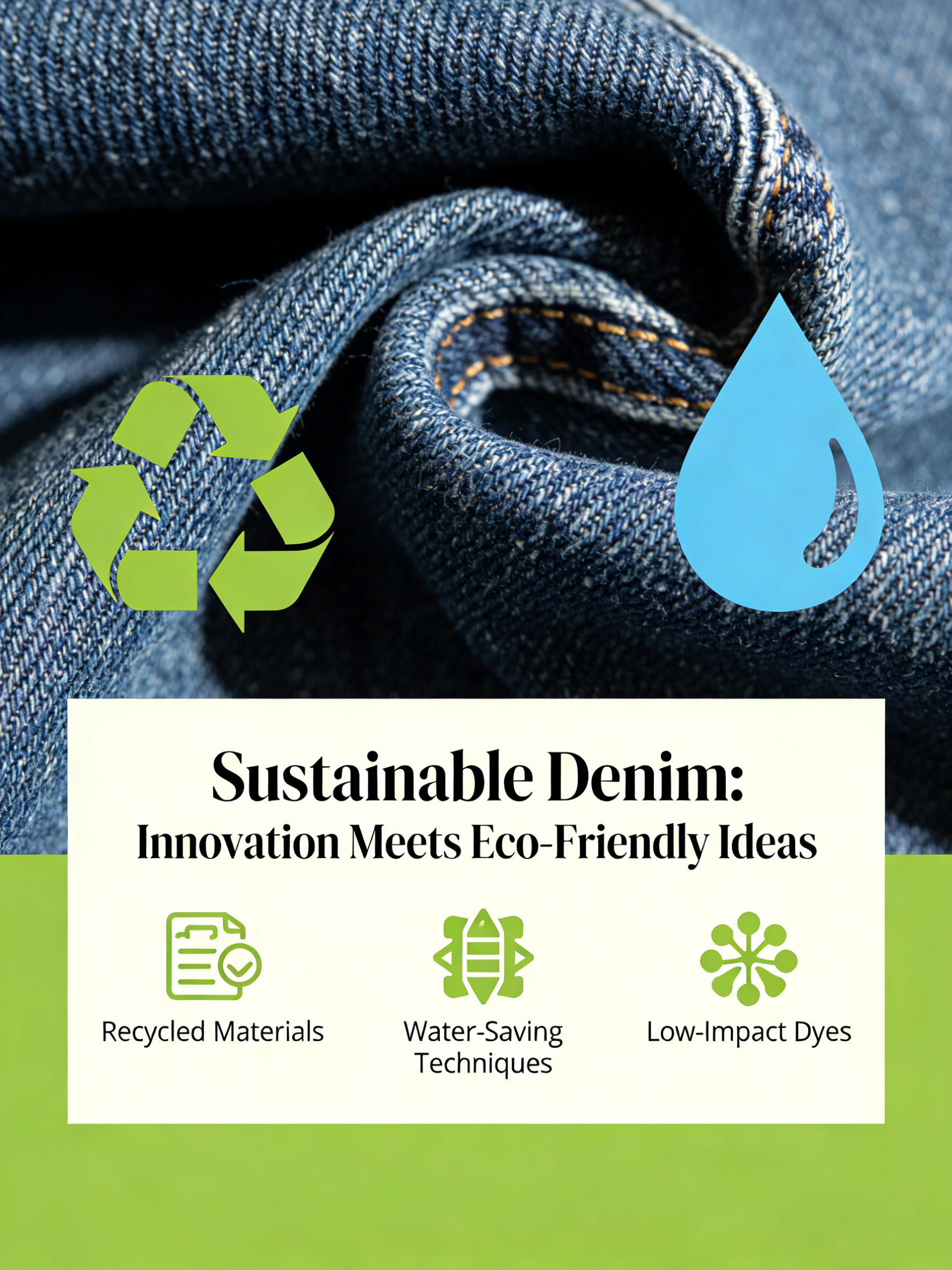
Low-Impact Materials: Rethinking Fibers for Sustainable Denim
Organic Cotton, Hemp, and Tencel — Verified Alternatives to Conventional Denim Fibers
Organic cotton eliminates synthetic pesticides, preserving soil health while reducing carbon emissions by 46% compared to conventional farming (Textile Exchange 2023). Hemp requires minimal water and naturally resists pests, yielding durable fabric with half the water footprint of traditional denim fibers. Tencel™ lyocell—derived from renewable wood pulp—uses a closed-loop production process that recycles 99% of solvents. All three meet OEKO-TEX® Standard 100 certification, ensuring safety for both people and ecosystems. Collectively, they reduce water consumption by up to 91% in cultivation phases (Cotton Inc. Impact Study), forming the foundational fiber strategy for credible sustainable denim.
Recycled Denim and Post-Consumer Blends: Performance, Limitations, and Scaling Realities
Post-consumer recycled (PCR) denim diverts textile waste from landfills, with advanced mechanical recycling transforming discarded jeans into new yarns. When blended with reinforcing fibers like hemp, modern PCR denim retains 85–90% of virgin cotton’s tensile strength. However, color consistency and fiber length degradation remain challenges after repeated recycling—partially addressed through polymer enhancement technologies. Scaling is currently hindered by fragmented collection infrastructure and high sorting costs, though automated textile recognition systems are improving efficiency. At just 8% of global denim output (Global Fashion Agenda 2023), PCR adoption underscores the urgent need for cross-industry collaboration to build robust take-back systems and maintain performance without compromising environmental integrity.
Water-Saving Technologies: Cutting the Biggest Environmental Cost in Denim
Laser Finishing and Ozone Washing — Near-Elimination of Water in Garment Finishing
Laser finishing replaces water-intensive processes like stone washing by using targeted energy to etch fades and distressing directly onto fabric—eliminating thousands of gallons per batch. Ozone washing achieves similar softening and bleaching effects using gaseous ozone instead of liquid immersion. Together, these technologies reduce finishing water use by up to 90% versus conventional methods, while also removing hazardous chemical runoff entirely. Manufacturers report measurable cost savings alongside environmental gains—making them among the most scalable and immediately impactful water-saving interventions in denim production.
Foam Dyeing and Closed-Loop Systems — Managing Effluent Without Compromise
Foam dyeing applies pigments via aerated foam rather than water baths, cutting liquid consumption by 60% during coloration while preserving vibrancy and consistency. Paired with closed-loop water systems—which capture, filter, and reuse 95% of process water—these innovations transform wastewater management. One leading facility achieved a 20-million-liter annual reduction after full implementation. Unlike incremental fixes, this integrated approach proves that rigorous environmental stewardship aligns seamlessly with industrial-scale quality and efficiency.
Non-Toxic Color & Finish Solutions for Sustainable Denim
Bioindigo, Enzymatic Dyeing, and Natural Finishes — Replacing Hazardous Chemicals
Conventional denim dyeing relies on petroleum-based synthetic indigo and toxic auxiliaries like formaldehyde and heavy metals—contributing to worker exposure and waterway contamination. Bioindigo, produced by genetically engineered microbes, delivers identical color performance without fossil inputs or hazardous byproducts. Enzymatic dyeing replaces corrosive agents such as potassium permanganate with precision-targeted proteins, reducing water use by 60–80% while enabling cleaner fabric etching. Natural finishes—derived from aloe, chitosan, or plant-based waxes—substitute formaldehyde resins with biodegradable, antimicrobial alternatives. Garments treated this way decompose safely and shed 90% fewer microplastics than conventionally finished denim. Independent testing confirms these solutions meet industry benchmarks for colorfastness and wear performance—proving non-toxicity and functionality are not mutually exclusive.
Circularity in Action: From End-of-Life to New Life in Sustainable Denim
Garment-to-Garment Recycling and Microfiber Capture — Closing the Loop Responsibly
Garment-to-garment recycling transforms post-consumer denim into high-quality new yarn—avoiding downcycling and retaining fiber integrity. Concurrently, in-wash microfiber capture systems intercept 90% of elastane-derived microplastics before they enter municipal waterways. Combined, these systems reduce landfill waste by 30% per ton of recycled fabric and conserve 20,000 liters of water per reused garment. As mechanical recycling partnerships expand and sorting infrastructure matures, these technologies move beyond niche innovation toward systemic integration—reducing reliance on virgin cotton while actively mitigating pollution at multiple lifecycle stages.
FAQ
What are some alternatives to conventional denim fibers?
Alternatives include organic cotton, hemp, and Tencel™ lyocell. These materials significantly reduce water consumption and carbon emissions while maintaining ecosystem safety.
How does laser finishing contribute to sustainable denim production?
Laser finishing reduces water use by eliminating water-intensive processes like stone washing, making denim production more environmentally friendly.
What challenges face the adoption of post-consumer recycled denim?
Challenges include color consistency, fiber length degradation, and scaling issues due to fragmented collection infrastructure and sorting costs.
How do non-toxic color and finish solutions benefit the environment?
These solutions replace hazardous chemicals, reduce water use, and allow garments to decompose safely with fewer microplastics.