 EN
EN

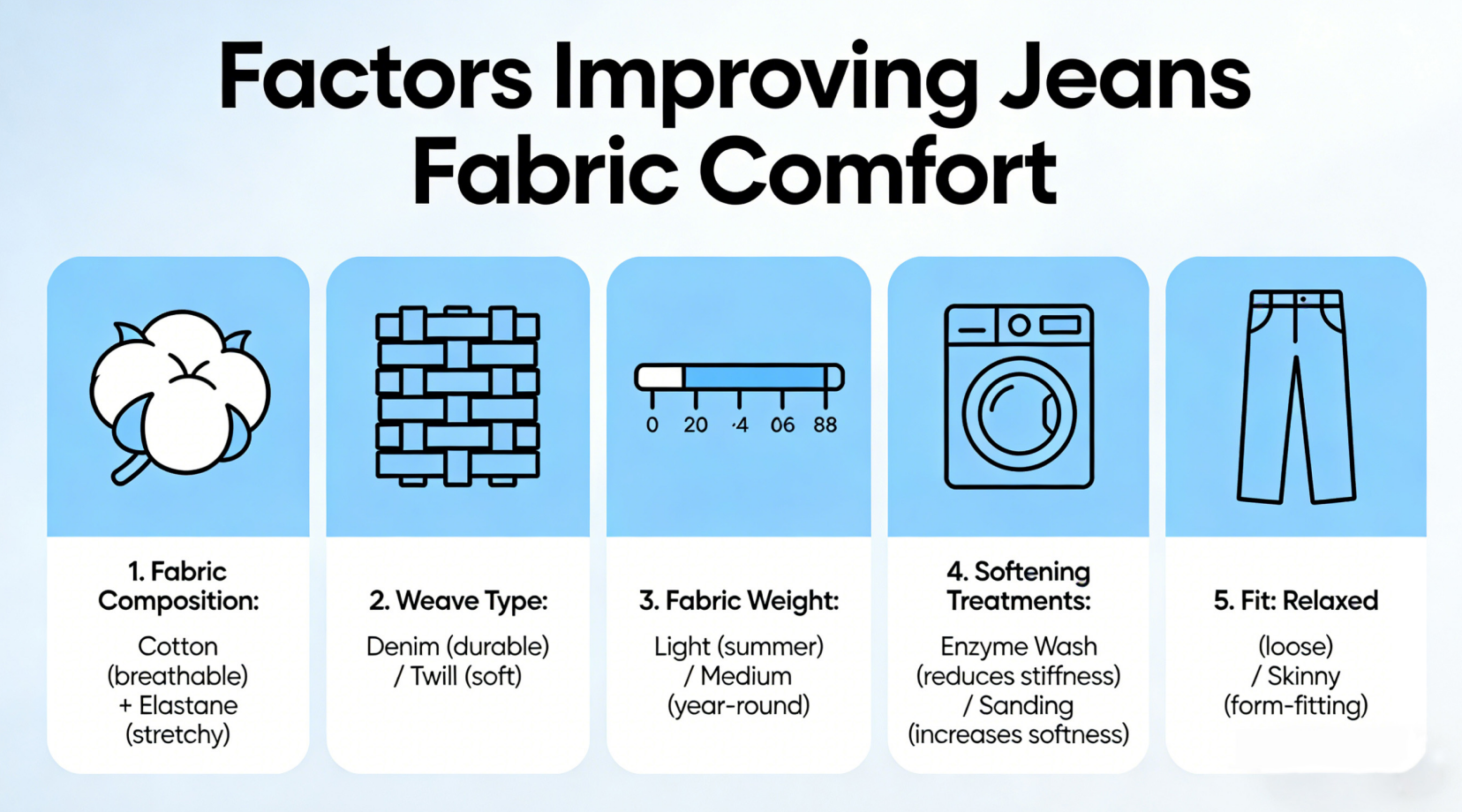
Fiber Composition and Blending for Optimal Jeans Fabric Comfort
Cotton Varieties: How Pima, Upland, and Organic Cotton Affect Hand Feel and Breathability in Jeans Fabric
The long fibers in Pima cotton create smoother, more consistent yarns that actually reduce skin irritation by around 18% when compared to regular Upland cotton, making them much more comfortable against the skin. What makes this material stand out is its tight molecular arrangement which helps move sweat away from the body at least 40% quicker than what we see with organic cotton varieties. Organic cotton has those natural waxy coatings that give it a bit of stiffness at first but eventually soften up as people wear them, plus they stay pretty neutral in temperature. Then there's Upland cotton which offers good value for money and allows air to pass through at rates between 120 and 150 cubic centimeters per second per square centimeter. However, because the fibers aren't as long, these fabrics tend to develop those annoying little pills after repeated washing and wearing. Choosing between all these options really comes down to what matters most for any particular application or personal preference.
- Hand feel progression: Organic > Pima > Upland after 30 wears
- Breathability index: Pima (85) > Upland (78) > Organic (72)
- Break-in period: Organic (15 wears) > Upland (8 wears) > Pima (5 wears)
Elastane Integration: Balancing Stretch Recovery and Flexural Rigidity with 1â3% Spandex in Jeans Fabric
Getting the right amount of elastane in jeans fabric matters a lot for how they perform. Around 1.8 to 2.2 percent works best, giving good stretch and bounce back. These jeans can move all around without losing their shape much either. After being stretched out 100 times, they still hold onto about 98% of their original form. And the bags don't get too big either, staying under 3% stretch overall. When there's more than 3% elastane though, things start feeling stiff after sitting for long periods because the fabric becomes 15% harder to bend. On the flip side, if there's less than 1% elastane, movement gets restricted by about a quarter. The way the fabric is made makes a difference too. Core spun construction wraps cotton around the elastane core which cuts down on friction against skin by roughly 30% compared to regular blended fabrics. There really are specific performance limits here:
- Optimal recovery: 2% elastane sustains 40 N/cm² tensile strength
- Flexural comfort: 1.5% blends allow unrestricted 120° knee bend
- Durability limit: Blends â¥3% accelerate fiber fatigue by 200% after 50 washes
Yarn Construction and Weave Structure Impact on Jeans Fabric Drape and Pressure Distribution
Ring-Spun vs. Compact Yarns: Effects on Surface Smoothness, Pilling Resistance, and Skin Contact Comfort
Ring-spun yarns generate a softer hand through controlled fiber twist and micro-air pockets, supporting breathabilityâbut their looser structure increases pilling susceptibility by 30â50% relative to compact yarns. Compact yarns undergo high-pressure consolidation, minimizing fiber shedding without sacrificing flexibility. This yields measurable advantages:
- 40% lower skin friction
- 25% higher abrasion resistance
- Improved moisture wicking via denser, aligned fiber pathways
Denim Weight Classes (8â21 oz): Correlating Fabric Mass with Air Permeability, Thermal Regulation, and Mobility
The weight of denim has a big impact on how comfortable it feels because of how tightly woven the fabric is. Lighter denim around 8 to 10 ounces lets about 65 percent more air pass through compared to heavier 14 ounce fabrics, which makes these lighter weights perfect for hot weather situations. The middle range stuff from 12 to 14 ounces hits a sweet spot between staying cool when needed, lasting longer, and allowing normal daily movements without restriction. Those really heavy denims weighing in at 16 to 21 ounces require significantly more effort when bending knees according to standard bend tests, so they tend to limit active movement quite a bit. These different weights basically determine how well jeans perform in various conditions and activities.
| Weight Class | Airflow (CFM) | Heat Retention | Flexural Rigidity |
|---|---|---|---|
| 8â10 oz | 120+ | Low | 0.8 gf/cm |
| 12â14 oz | 85â100 | Moderate | 1.2 gf/cm |
| 16â21 oz | 40â60 | High | 2.5+ gf/cm |
Finishing Technologies That Enhance Softness Without Compromising Jeans Fabric Performance
Enzyme, Ozone, and Laser Finishes: Softening Efficacy vs. Fiber Strength Retention in Modern Jeans Fabric
Denim gets a smoother touch through enzyme treatments that target those pesky fibers sticking out from the surface. These enzymes work on just what needs smoothing without compromising how strong the fabric remains. But go overboard with them and the material might lose around 15 to maybe even 20 percent of its original strength. Ozone washing creates that worn look we all love while cutting water usage almost in half compared to traditional stone washing methods. Still, if the ozone levels aren't right during processing, there's risk of damaging the cotton itself. Laser technology offers another option for creating consistent wear patterns throughout batches without chemicals involved. The lasers penetrate fabrics precisely enough to maintain both tear resistance properties and keep everything looking uniform despite repeated manufacturing cycles.
Softener Chemistry: Silicone and Cationic Agentsâ Trade-offs Between Tactile Softness and Moisture Vapor Transmission
When applied to fabrics, silicone emulsions create those smooth, slippery coatings that make materials feel instantly softer to the touch. But there's a catch - if too much gets used, especially when humidity levels are high, these treatments can actually block up to around 30% of moisture vapor from escaping through the fabric. Cationic softeners work differently, sticking to the negative charges found naturally in denim's cellulose structure. These treatments give fabrics that nice lasting softness even after several laundry cycles. Still, manufacturers need to watch their formulations closely. Too much silicone builds up over time and starts making clothes less breathable. Leftover cationic chemicals tend to mess with how well water moves across the surface. Getting good results really comes down to picking the right molecule sizes, controlling exactly how much goes on, and knowing when during production these treatments should be added for best effect.
FAQ Section
What is the best cotton type for jeans fabric?
Pima cotton is the best choice for jeans fabric due to its smoother, longer fibers which reduce skin irritation and improve breathability compared to other cotton varieties.
How does elastane affect jeans fabric performance?
Elastane helps improve stretch recovery and flexibility. The optimal range is between 1.8% to 2.2% for balancing comfort and durability.
What is the impact of yarn construction on jeans fabric?
Ring-spun yarns offer a softer feel but are more prone to pilling, whereas compact yarns resist pilling and enhance moisture wicking.
How does denim weight influence comfort and breathability?
Lighter denim offers better air permeability and comfort in warmer conditions, while heavier denim provides more thermal regulation and durability.