 EN
EN

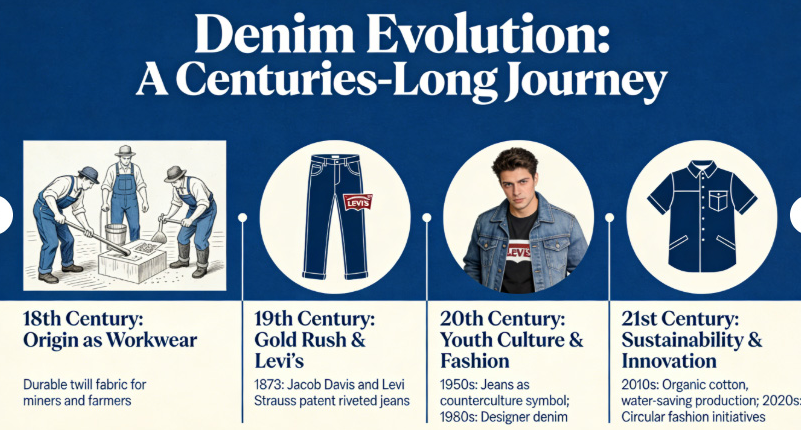
Origins and Industrialization: Denim History as Functional Fabric (17th–19th Century)
European roots: 'Serge de Nîmes' in France and 'jean' from Genoa
The story of denim really starts back in Europe during the 1600s when two tough work fabrics came into being at around the same time but from different places. French textile makers in Nîmes created something called serge de Nîmes, which was basically a mix of wool and silk woven in a special way that eventually got shortened to just "denim." Meanwhile across the continent in Genoa, Italian craftsmen were making rough cotton fabric known as jean cloth specifically for people who worked hard like dock workers and other manual laborers. What both these fabrics had in common was their focus on durability rather than looking fancy, thanks to that diagonal weave pattern that made them resistant to tearing even after lots of rough handling. Fast forward to the 1700s and American factories started adopting similar methods but used cotton grown right here in the US. This helped establish denim as something practical and built to last for everyday working folks.
Levi Strauss & Jacob Davis’s 1873 riveted jeans patent: Solving real-world labor demands
Back in 1873, Levi Strauss teamed up with a local tailor named Jacob Davis to create something special after noticing a common issue among miners and railroad workers. These folks kept tearing their pants, especially around the pockets and where the seams put pressure on the fabric. What they came up with was pretty clever copper rivets placed right at those trouble spots like pocket corners and the bottom of the fly area. This little fix made a big difference. Looking at old trade documents from that time shows something interesting too these reinforced pants cut replacement costs down by as much as 80% for working men. That basically changed everything for denim, turning it from just another fabric into actual workwear designed for specific jobs. When looking at what made these pants so good, think about all those details double stitched seams everywhere, extra strong belt loops, and plenty of room in the legs. All of this meant workers could move around without constantly worrying about their clothes falling apart during long shifts.
Early manufacturing: Shuttle looms, selvedge edges, and the indigo dye transition
In the 1800s, most denim was made using those narrow shuttle looms that produced really tight fabric with those neat finished edges along the side. These edges got called selvedge because they basically edge themselves, stopping the fabric from fraying without needing extra work. Back then people used natural indigo dye from these plants called Indigofera tinctoria. But things changed around 1897 when synthetic indigo came along. It was cheaper, worked better every time, and could be made in bigger quantities. Even though some folks kept using the old rope dyeing techniques for that deep color and nice fading effect, switching to synthetic stuff let manufacturers produce way more denim. Just making one bolt of selvedge denim took about three times as long compared to what we see today with modern machines. And honestly, these technical aspects were pretty much what determined whether the denim was considered good quality or not.
- Twill weave: Diagonal ridges improved abrasion resistance and helped shed dirt
- Rope dyeing: Immersing yarn bundles in indigo vats yielded deeper, more fade-resistant color
- Shuttle efficiency: Narrow looms produced denser, heavier fabric (12–14 oz/yd), ideal for demanding labor
Mainstream Adoption: Denim History Enters American Identity (1930s–1950s)
Hollywood Westerns and Cowboy Mythology: Cementing Denim as Rugged Individualism
Between the 1930s and 1950s, Hollywood western movies completely changed what people thought about denim. Movie stars such as John Wayne back then, and later on James Dean, started wearing jeans in their films. These films told stories about tough guys out west who could handle anything on their own. Pretty soon, those simple work clothes became a sign of being tough and independent in America. Young people after World War II really connected with this image. They started wearing jeans themselves as a way to say no to everyone wanting them to fit in. Schools even tried to ban jeans, calling them "too wild" or just plain "wrong." But teens kept buying and wearing them anyway. What began as clothing for farm workers turned into something totally different. Denim became a statement of freedom instead of just work gear. It was like a fashion statement for kids who wanted to change how society worked.
WWII Rationing and Civilian Adoption: Denim as Essential, Accessible, and Patriotic
Denim really took off during World War II when it went from just something workers wore on the job to becoming a must-have item across the country. The government had to redirect resources like silk and wool for the military effort, so they made cotton denim an official requirement for people working in factories, fixing things, and serving in the armed forces. Regular folks started grabbing onto jeans too, seeing them as practical clothes that showed support for the war effort. They were cheap enough for most people, held up well through tough conditions, and fit right into the spirit of everyone doing their part. When soldiers came back after the war ended, many kept wearing those same jeans around town instead of only at work sites. Around this time, almost every farm in America was using denim gear daily, while city kids got creative with leftover military supplies and regular store bought jeans, turning them into fashion statements for streets everywhere. What really stuck was how denim could be both useful stuff for getting real work done and also cool clothing anyone could afford, making it rooted in what Americans saw as their own style and way of life.
Cultural Transformation: Denim History as Symbol of Rebellion and Status (1960s–2000s)
Youth counterculture and school bans: Denim as anti-authority uniform
Denim was all over the place by the 1950s, pretty much attached at the hip to youth rebellion. Schools started banning them left and right, calling jeans disruptive or just plain inappropriate, which only made kids want them more. Rock stars like Elvis Presley turned denim into something rebellious. Later on, punks took it even further with torn edges, patchwork designs, and those dark sulfur-dyed versions that looked nothing like the clean, shiny stuff everyone else wore after the war. Kids from every background wore jeans not because they needed them for work, but as a way to say "we're different." The whole decade basically cemented denim's transformation from work clothes to rebel wear, becoming this symbol of freedom, realness, and standing up against whatever authority tried to tell them what to do.
Designer democratization: Calvin Klein, Gloria Vanderbilt, and the luxury denim boom
Denim really hit it big in high fashion during the 70s and 80s. It stopped being just something people wore to look rebellious and became a symbol of status instead. Big names such as Calvin Klein and Gloria Vanderbilt started making fancy denim collections where fit mattered more than function, and brand logos were everything. Fashion shows started showing off denim skirts, jackets with all sorts of special wash effects, while major department stores carved out whole sections just for designer jeans. This wasn’t simply copying what others had done before; it was completely redefining denim's role in society. People were willing to shell out extra cash for those famous labels, perfectly shaped cuts, and the feeling that they owned something exclusive. The result? A massive surge in luxury denim sales that changed how retailers operated, transformed marketing strategies, and set new standards for what consumers expected from their clothing purchases.
Modern Innovation and Responsibility: Denim History in the 21st Century
Performance fabrics and sustainable tech: Stretch denim, laser finishing, and waterless dyeing
The story of denim today shows a clear shift towards better performance and caring for our planet. Stretch denim mixed with elastane has changed what we expect from jeans comfort wise while keeping their shape intact. Now people can wear them anywhere from work meetings to long flights without discomfort. The industry has also made big strides in how jeans get those worn-in looks. Laser technology has taken over from old methods that used harmful chemicals, allowing designers to create distressed effects precisely without polluting waterways. Some brands have developed ways to dye jeans without water at all using foam or air-based systems, which saves around 90 percent of the water normally needed for traditional dye vats. These changes address the fact that denim was once known as one of the worst textiles for resource consumption. Big name manufacturers are now adopting practices like recycling indigo dye, sourcing organic cotton grown sustainably, and opening up their supply chain information publicly. What this means is that companies are proving it’s possible to make stylish jeans that don’t cost the earth literally.
FAQs
What is the origin of denim?
Denim originated in Europe in the 1600s with French textile makers in Nîmes creating 'serge de Nîmes' and Italian craftsmen in Genoa producing 'jean' cloth. Both focused on durability.
Who invented riveted jeans?
Levi Strauss and Jacob Davis are credited with inventing riveted jeans in 1873 to solve durability issues for miners and railroad workers.
How did WWII affect the popularity of denim?
WWII made denim a necessary item as the government prioritized cotton over silk and wool, increasing civilian adoption and associating denim with patriotic support.
How did denim become a symbol of rebellion?
In the 1950s, denim became associated with youth rebellion as schools banned jeans and rock stars popularized them as anti-authority clothing.
What are the advancements in sustainable denim?
Modern advancements include stretch fabrics, laser finishing for worn-in looks, and waterless dye technologies to reduce denim's environmental impact.
Table of Contents
- Origins and Industrialization: Denim History as Functional Fabric (17th–19th Century)
- Mainstream Adoption: Denim History Enters American Identity (1930s–1950s)
- Cultural Transformation: Denim History as Symbol of Rebellion and Status (1960s–2000s)
- Modern Innovation and Responsibility: Denim History in the 21st Century