 EN
EN

Why High Stretch Denim Poses Unique Dyeing and Printing Challenges
Elastane’s Interference with Dye Diffusion and Shade Uniformity
The elastane found in high stretch denim makes up about 1 to 5% of the fabric, but this small amount actually creates problems when trying to dye the material properly. Cotton naturally absorbs dyes because it likes water, but elastane is different. It repels water and has a very tight crystal structure that just won't let regular dyes like indigo or vat dyes penetrate through. What happens then is that all the dye ends up sitting on the cotton parts while completely missing the elastane threads, which leads to uneven coloring throughout the fabric. When manufacturers stretch the fabric during production, this already uneven situation gets worse. The stretching pulls at the fibers differently, creating those annoying streaks and patches we sometimes see in finished jeans. Factory workers have to tweak things like how thick the dye is, how long the fabric stays in the dye bath, and even how they handle the material mechanically. Still, getting an even color proves really challenging when dealing with different levels of stretch intensity from batch to batch.
Core-Spun Yarn Architecture: How Cotton Sheath and Elastane Core Affect Indigo Penetration
In core-spun yarn construction, elastane makes up the center while cotton forms the outer layer. This creates what manufacturers call a double barrier when trying to get dye into the fabric. Indigo works great on the cotton part but just won't go through the elastic middle, leaving those areas looking lighter. What happens next is interesting: when denim gets damp during processing, the cotton actually tightens around the elastane strand, making it even harder for dyes to reach deep inside. Tests show this can cut dye absorption by around 30% compared to regular cotton denim. Over time, normal wear and tear wears away at the surface, revealing bright white strands of undyed elastic beneath. Some mills have found success by adjusting how tightly the yarn is twisted and using special treatments before dyeing. These methods loosen the cotton's hold on the core without sacrificing stretch properties, which helps achieve better overall color penetration.
Dye Selection Strategies for High Stretch Denim
Indigo Limitations and Workarounds for Cotton/Elastane Blends
The problem with indigo and elastane is pretty straightforward really. Indigo just doesn't stick well to elastane fibers, which means regular indigo won't work so great for those stretchy jeans we all want these days. What happens here is that indigo mainly attaches itself physically instead of forming proper chemical bonds, leaving most of the actual elastic part inside the yarn completely untouched, particularly noticeable in those core-spun fabrics where the elastic runs right through the middle. We've found that running multiple dip and oxidation steps helps get better color coverage on the outside, and mixing in some sulfur dyes tends to make everything grab onto the fibers better overall. There's also this trick where treating the fabric first with certain positive charge chemicals can actually increase how much dye gets absorbed by about thirty percent without messing up the stretchiness too bad. This has been tested out using standard methods outlined in AATCC TM213 for measuring how well things bounce back after stretching.
Vat, Reactive, and Acid Dyes: Matching Chemistry to Fiber Composition
When it comes to coloring cotton fabrics, vat dyes give really rich colors that last a long time. But here's the catch they need powerful chemicals like sodium hydrosulfite, which can actually break down the polyurethane in elastic fibers. On the flip side, those low impact reactive dyes work differently by creating stable chemical bonds even at fairly warm temperatures around 60 degrees Celsius. This means less heat exposure and fewer harsh chemicals overall for the fabric. Acid dyes have their place too, but only when working with nylon components in stretchy blends. Getting the pH levels right during acid dyeing is absolutely critical though, otherwise the fibers get damaged. Labs have tested this stuff extensively, and what they found was pretty telling: reactive dyed fabrics keep about 92% of their stretchiness after processing, while vat dyed ones drop down to just 78%. That makes a big difference in quality Textile Chemists Journal reported back in 2024.
Advanced Dyeing Methods That Preserve Elastic Recovery and Color Integrity in High Stretch Denim
Cold Pad Batch vs. Rope Dyeing: Efficiency, Consistency, and Stretch Retention on High Stretch Denim
The cold pad batch or CPB method has really changed things when it comes to making high stretch denim both faster and better at keeping its shape. What makes this technique special is that it cuts out those long soaking periods and mechanical twisting steps that traditional methods rely on. As a result, factories can finish their work around 40% quicker than with rope dyeing processes. Tests done by independent labs show that most of the fabric's stretchiness stays intact too, holding onto about 95% of what was there originally according to AATCC standards. Traditional rope dyeing isn't so gentle though. This older approach puts core spun yarns through constant stress and twisting which breaks down the yarn structure over time. The uneven way indigo gets into the fibers creates problems, sometimes leaving behind as much as 15% permanent stretching issues in these stretchier materials.
pH-Controlled Exhaust Dyeing: Proven 82% Color Retention After 10 Industrial Wash Cycles (TexProcess 2023)
Getting the right balance of alkalinity when using exhaust dyeing techniques is really important for keeping elastane fibers intact while making sure the dye sticks properly. When we keep the pH level around 10.2 to about 10.5, it helps create those strong molecular bonds across the fabric without harming the delicate polyurethane inside. According to tests done by TexProcess in 2023, fabrics treated this way hold onto their color much better too. After going through ten full industrial washing cycles, they retain approximately 82% of their original color intensity. Plus there's another benefit: manufacturers report cutting down on water usage by roughly 30%. And what's even more impressive? The fabric bounces back almost completely after stress tests, recovering nearly 98% of its initial size and shape.
Emerging Printing Solutions for High Stretch Denim
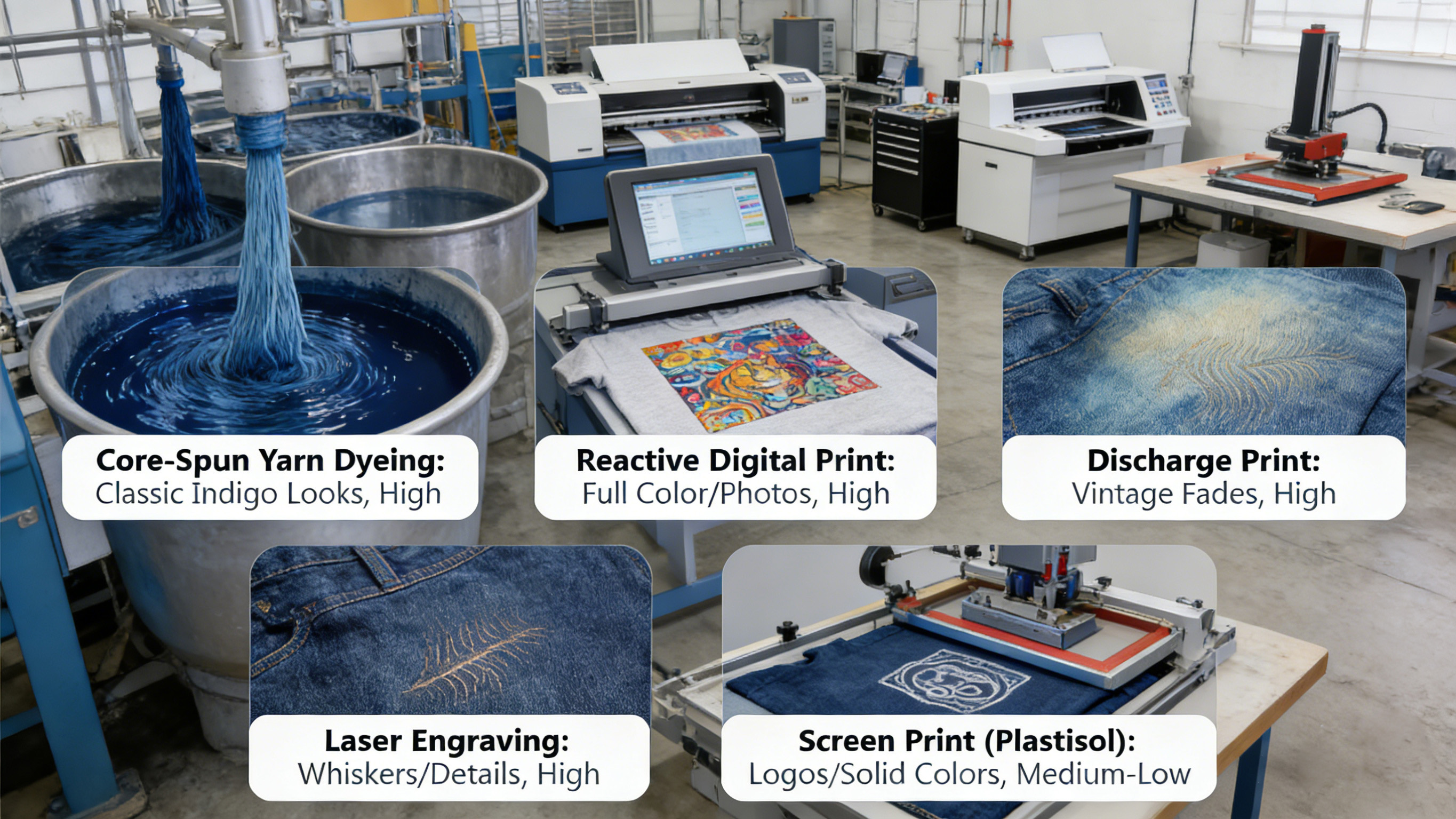
New printing tech is finally solving some major problems with finishing stretch denim fabrics. Take DTG printing for instance it puts designs exactly where they need to go without those harsh chemicals that eat away at elastane fibers. Tests show these garments still have about 98% of their original stretch even after repeated wear and tear. For distressed looks, manufacturers now use digital methods that don't require water intensive washing steps. This means no more running the risk of colors bleeding together when someone actually wears the jeans. The newest pigment printers are particularly impressive. Labs found only tiny changes in color shade after 50 full wash cycles which matters a lot since denim moves around so much on the body. All these improvements cut down water consumption anywhere from 70 to 90 percent compared to old school denim finishing methods. Makes sense really green manufacturing isn't just good for the planet anymore it's becoming standard practice across the industry.
FAQ Section
Why does high stretch denim pose unique dyeing challenges?
High stretch denim contains elastane, which repels water and dyes, creating uneven coloring. The stretching process can worsen these inconsistencies.
What problems arise from the core-spun yarn structure in denim?
The core-spun yarn structure creates a double barrier that prevents proper dye penetration, leading to lighter areas in the fabric.
How can dye absorption be improved in cotton/elastane blends?
Using multiple dip and oxidation steps, sulfur dyes, and positive charge chemicals can improve dye absorption in cotton/elastane blends.
What are the benefits of cold pad batch dyeing for stretch denim?
Cold pad batch dyeing speeds up production by 40% and preserves about 95% of the fabric's original stretchiness.
How does digital printing benefit high stretch denim?
Digital printing like DTG places designs accurately without damaging elastane fibers, maintaining 98% of the original stretch even after wear.
Table of Contents
- Why High Stretch Denim Poses Unique Dyeing and Printing Challenges
- Dye Selection Strategies for High Stretch Denim
- Advanced Dyeing Methods That Preserve Elastic Recovery and Color Integrity in High Stretch Denim
-
Emerging Printing Solutions for High Stretch Denim
- FAQ Section
- Why does high stretch denim pose unique dyeing challenges?
- What problems arise from the core-spun yarn structure in denim?
- How can dye absorption be improved in cotton/elastane blends?
- What are the benefits of cold pad batch dyeing for stretch denim?
- How does digital printing benefit high stretch denim?