 EN
EN

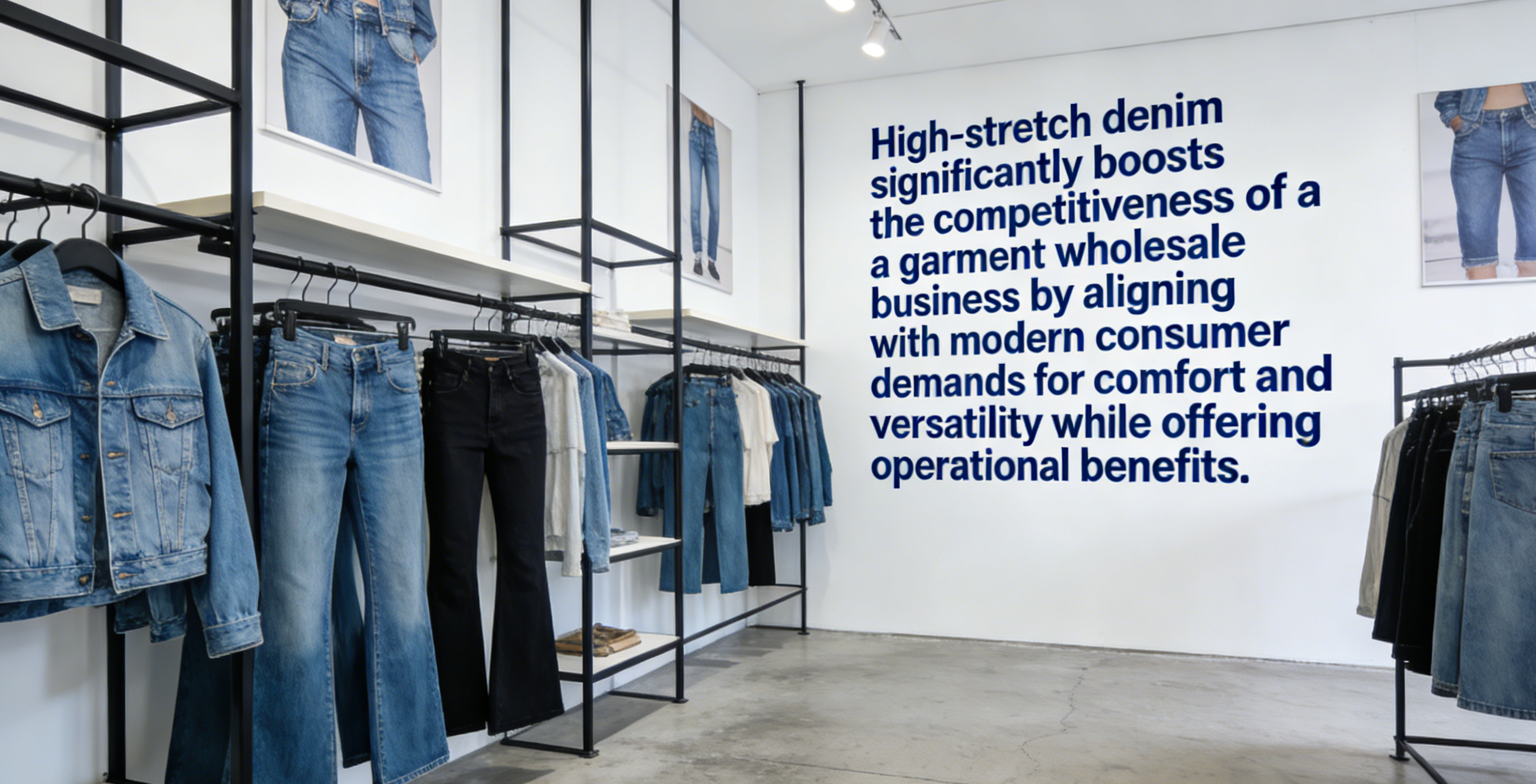
High-Stretch Denim as a Strategic Differentiator for Wholesale Buyers
Why 35–45% stretch denim drives order growth in women’s bottoms and jeggings
More and more wholesale buyers are going for high stretch denim fabrics that fall between 35 to 45 percent elongation because shoppers want their jeans to be comfortable, flexible, and good enough to wear all day long. The numbers back this up too. According to 2023 wholesale data, pants made from denim in this stretch range actually sell about 27 percent faster when it comes to women's jeggings and skinny jeans. Why? Because they move better with the body without losing their shape over time. And here's something else interesting. Denim that keeps stretching properly even after being worn fifty times or more leads to around 19 percent more repeat business for retailers. This means fewer returns due to sizing issues and customers tend to stick with brands they trust.
Fit consistency across size runs: How superior recovery cuts returns by up to 22%
High quality recovery tech helps cut down on those annoying size-related returns because it makes sure fabrics behave consistently throughout all sizes from 00 to 24W. Denim that bounces back at least 95% of its original shape after being stretched 5,000 times (tested under AATCC 134 standards) means wholesalers deal with about 18 percent fewer complaints about fit issues and can expect return rates dropping as much as 22%, per last year's Apparel Returns Report. The fact that clothes keep their shape over time lets stores manage their stock better with fewer different sizes to track while still offering inclusive options for customers. That kind of performance gives companies a real edge when competing in the tough world of wholesale clothing sales these days.
Technical Edge: Stretch and Recovery Technology Behind High-Stretch Denim Performance
Beyond elasticity: Why certified recovery (>95% after 5,000 cycles) builds B2B trust and pricing power
Just having stretch isn't enough these days in the denim market. What really matters commercially is certified fabric recovery. When denim passes the ASTM D2594 test with over 95% shape retention after going through 5,000 wash cycles, it actually makes a difference in how stores operate. Stores report around 22% fewer returned items based on their quality checks, plus customers get the same fit from one batch to another, which cuts down on complaints and saves money at customer service desks. Getting third party certification builds confidence all along the supply chain and lets manufacturers charge what they're worth. This means wholesalers can often ask for price increases of about 8 to 12 percent when talking to retailers because they have solid proof behind their claims.
Yarn architecture deep dive: Lycra® T400 vs. PTT blends and their impact on fabric lifespan and reorder rates
Fiber composition directly influences commercial outcomes. Independent lab testing shows:
| Property | Lycra® T400 | PTT Blends | Commercial Impact |
|---|---|---|---|
| Recovery Rate | 97% after wash cycles | 89% after wash cycles | 18% higher reorder rates |
| Abrasion Resistance | 25,000+ Martindale cycles | 18,000 Martindale cycles | 30% longer shelf life |
| Moisture Wicking | 65% faster drying time | 40% faster drying time | Lower defect complaints |
Lycra® T400’s bicomponent structure resists polymer degradation during laundering—preserving size integrity across production runs and ensuring reliable performance cycle after cycle. This consistency fuels repeat business and strengthens retailer confidence in long-term sourcing partnerships.
Market Shift: Rising Wholesale Demand for Verified High-Stretch Denim SKUs
68% of U.S. and APAC wholesalers now prioritize performance-ready denim with documented stretch/recovery specs
Something big is happening in the market right now. About two thirds of US and APAC wholesalers are changing how they buy stuff, putting high stretch denim at the top of their list only when it comes with real test results from independent labs, not just what brands say about their products. The reason? Retailers are getting tired of dealing with all those returns because jeans either shrink too fast or don't fit properly from day one. These problems happen a lot with regular denim that doesn't meet certain standards for stretch recovery (less than 95% after 5,000 washes). Most of these fabrics start looking worn out after just 10 wears max. Now most wholesalers want proof from actual lab tests showing good stretch retention and proper testing according to AATCC 134 standards before they even consider bringing new items into stock. Companies that work with denim already tested and documented see their products sell off shelves about 19% quicker and get around 31% fewer complaints about fit issues. No wonder why these stats are making such a difference in what prices wholesalers can charge for quality denim these days.
Operationalizing Advantage: Turning High-Stretch Denim into Faster Sales and Stronger Margins
Embedding technical dossiers (AATCC 134 data, stretch metrics) into wholesale catalogs to shorten sales cycles
When manufacturers include AATCC 134 recovery ratings and exact stretch measurements right in their wholesale catalogs, it really speeds things up for buyers looking to make decisions. No need for extra checks anymore, which cuts down on those lengthy sample evaluations by around 3 to 5 workdays according to industry standards. Buyers love seeing real test results from labs too. Think numbers like over 95% fabric bounce back after thousands of stretches or elasticity ranges between 35% and 45%. These kinds of specifics instantly build trust with bulk purchasers who want confidence before placing orders. What happens next? Well, the whole purchasing process gets smoother and quicker throughout the supply chain.
- Reduced sales overhead: Technical teams field 40% fewer specification inquiries
- Margin protection: Buyers accept 12–18% price premiums for verified performance
- Order accuracy: 98% size consistency across production runs minimizes returns
By transforming test data into customer-facing assets, wholesalers compress sales cycles and convert technical validation into tangible competitive leverage—without adding complexity to the buying process.
FAQ
-
Why is high-stretch denim preferred by wholesale buyers?
High-stretch denim offers better comfort and flexibility, leading to higher customer satisfaction and increased sales. -
How does superior recovery technology affect return rates?
Superior recovery technology ensures consistent fit, reducing returns by up to 22% due to fewer complaints about size-related issues. -
What certifications are important for denim recovery?
Certified fabric recovery passing ASTM D2594 tests showing over 95% retention after 5,000 cycles is essential for trust and pricing power.
Table of Contents
- High-Stretch Denim as a Strategic Differentiator for Wholesale Buyers
- Technical Edge: Stretch and Recovery Technology Behind High-Stretch Denim Performance
- Market Shift: Rising Wholesale Demand for Verified High-Stretch Denim SKUs
- Operationalizing Advantage: Turning High-Stretch Denim into Faster Sales and Stronger Margins