 EN
EN

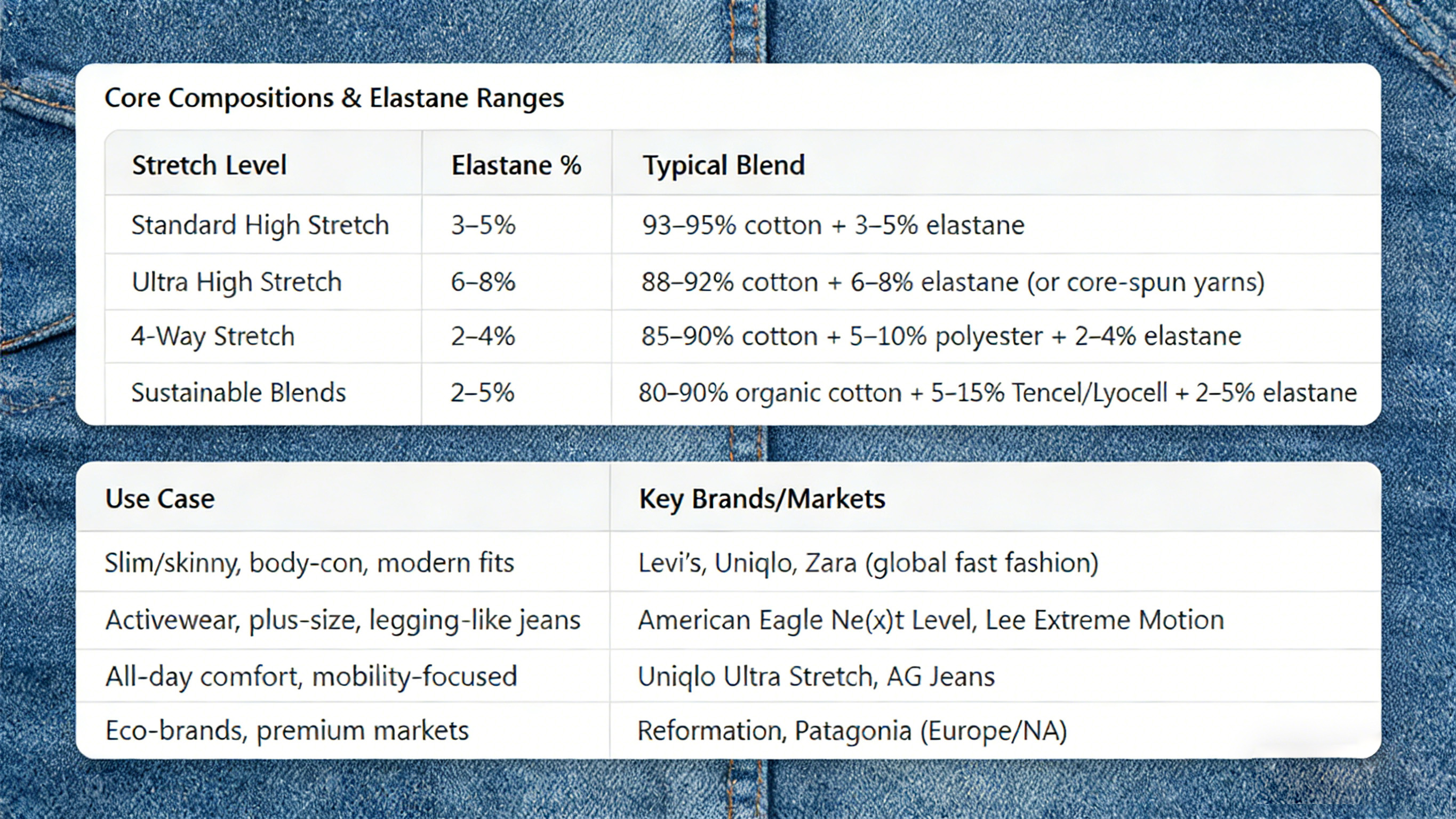
Core High-Stretch Denim Fabric Compositions and Performance Trade-Offs
Cotton–elastane ratios: Balancing stretch recovery, durability, and comfort
Getting the right mix of cotton and elastane really makes or breaks high stretch denim quality. Most manufacturers stick to around 92 to 98 percent cotton mixed with 2 to 8 percent elastane according to what the American Association of Textile Chemists and Colorists recommends. When they bump up the elastane content between 5 and 8 percent, jeans get that extra stretch in all directions for better fitting shapes, though they tend to wear down faster about 18% quicker based on some wear tests. On the flip side, using just 2 to 4 percent elastane gives fabric more staying power which works great for work clothes where people need stuff that lasts longer than it stretches. These days, denim makers have gotten pretty good at finding that sweet spot. Stretch recovery rates over 92% are becoming common among top producers, especially since adding Tencel helps reduce those annoying pills while keeping fibers intact.
Bi-stretch and dual-axis elasticity: Technical advantages for premium high stretch denim
Fabric made with bi-stretch technology lets the material stretch both ways at once, giving full 360 degree movement while keeping expansion under 2% even after lots of stretching back and forth. Regular stretch fabrics only go one direction, which means they tend to sag around areas that move a lot like knees and hips. That's why many people end up with baggy jeans over time. The real secret lies in core spun yarns where elastic fibers are wrapped completely in cotton or Tencel. Tests from Hohenstein Institute show these fabrics bounce back between 94 and 96 percent after being worn. Because of this construction feature, designers can create better fitting clothes that maintain their shape through daily wear without compromising on comfort or how they look months down the road.
Recycled elastane: Adoption rates, performance parity, and scalability challenges
The uptake of recycled elastane still lags behind expectations, making up less than 15% of all stretchy denim produced worldwide even though many brands claim commitment to circular practices. According to the 2023 Fibre-to-Fibre Report by the Ellen MacArthur Foundation, early versions of recycled elastane degrade faster under tension compared to new material, showing around 12 to 18 percent quicker loss of elasticity because the polymer chains break down during mechanical recycling processes. Chemical recycling methods preserve performance better but require major capital investments in specialized equipment. Some forward thinking textile manufacturers like Arvind Limited and Saitex are experimenting with mixed approaches that incorporate Refibra lyocell fibers to compensate for the shortcomings of recycled elastane. Most recycled options today satisfy approximately 86% of standard industry requirements for elastic recovery according to ISO 17888 specifications. However true scale remains out of reach without breakthroughs in separating different fiber types and stronger cooperation across entire supply chains.
Global Manufacturing Hubs Driving High-Stretch Denim Innovation
Asia-Pacific R&D leadership: How China, Vietnam, and Bangladesh scale high stretch denim production
The Asia Pacific region churns out around 7.5 billion meters of denim each year, which accounts for roughly half of what gets made worldwide. When it comes to stretchy denim innovations, this area is really leading the charge thanks to combining research with actual manufacturing processes. Take China for instance they've pretty much taken over the market with their smart machines that automate dyeing and those super accurate lasers that finish fabrics. This helps keep the stretch properties consistent throughout different fabric runs. Vietnam has become something of a powerhouse when it comes to getting prototypes done quickly for those fast fashion brands needing new designs on short notice. They can cut down development times by almost 40 percent compared to traditional approaches. Meanwhile Bangladesh has built up massive production capabilities handling orders well over half a million pieces per month. The country is also making strides in developing washing techniques that don't require water at all. All together, these regions are implementing clever AI systems for optimizing patterns and recycling water within their factories. As a result, production times have dropped by about 30% compared to older methods. This allows manufacturers to serve both budget conscious consumers looking for affordable jeans as well as customers willing to pay extra for higher quality products.
Sustainability reality check: Elastane recovery rates vs. green claims in mass-market high stretch denim
The talk about circular denim is everywhere these days, but the reality isn't so great. We're only getting back around 12% of elastane fibers when recycling old clothes, mainly because nobody has figured out how to separate elastane from cotton blends properly. Most jeans on store shelves have between 15 and 25% elastane for that stretch factor, yet look at the numbers from Textile Exchange's latest report: under 8% of big manufacturers actually run facilities that can chemically dissolve and reuse this stuff. And what happens? Fast fashion garments typically get tossed after about 20 wears max, which completely contradicts all those green marketing promises. Some innovative textile companies are working on solutions though. They're developing bio-based alternatives to traditional elastane materials. Take Fulgar's ROICA V550 line for example. These new fibers still give that four way stretch people want, but they can be broken down using enzymes once the garment reaches the end of its life cycle.
Functional Fiber Blends Elevating High-Stretch Denim Performance
Tencel®, Refibra®, and PPRM integration: Enhancing drape, moisture management, and elastic recovery
The way we integrate different fibers into stretch denim is changing what consumers expect from their jeans. Take Tencel lyocell for instance it makes the fabric hang better against the body and feels much softer next to skin. Tests show it can wick away sweat about 40 percent faster than regular cotton according to Lenzing AG's research last year. Then there's Refibra, which mixes old cotton with wood pulp from trees. This helps keep materials out of landfills without making the jeans fall apart when stretched. The fabric still holds its shape even in areas that get lots of stress like around the waistband and seat area. Another innovation called Polypropylene Rich Material cuts down on how heavy the jeans feel by roughly 20% or so, but they stay shaped after someone moves around all day. All these fiber combinations are hitting those basic wants people have for comfortable yet durable denim wear.
- 4D comfort: Adaptive breathability during activity
- Fatigue resistance: 30% less bagging versus standard elastane blends (Hohenstein Institute wear trial, 2023)
- Sustainability alignment: Up to 50% lower water use and 35% reduced energy consumption in processing
Lab validation confirms blended constructions retain >90% original elasticity after 50 industrial washes—outperforming traditional cotton–spandex fabrics and meeting stringent OEKO-TEX® Standard 100 Class I requirements for infant wear.
Strategic Sourcing Shifts Strengthening High-Stretch Denim Supply Chain Resilience
Nearshoring rise: Mexico and Turkey as agile, mid-volume hubs for responsive high stretch denim procurement
More and more clothing companies are moving their sources for stretchy jeans to places like Mexico and Turkey these days. These regions have become go-to spots because they can adapt quickly, handle medium sized orders, and are close to where people actually buy the stuff. According to McKinsey's latest survey from 2024, around 9 out of 10 apparel makers are spreading out where they get their materials from. The denim factories in Mexico work really fast when it comes to making smaller batches of those tricky elastic styles. Meanwhile, Turkish manufacturers check all the boxes for European standards and know how to finish premium stretch fabrics properly. Moving production closer home reduces wait times between ordering and delivery by about half compared to shipping across oceans. This setup works well with those modern stock management systems that keep shelves stocked based on what customers want right now. Plus, it helps avoid getting hit with extra taxes on imported goods something that matters a lot for stretch denim since nobody wants to hold onto inventory that nobody wants to buy. All these changes make the whole supply chain much tougher when things get shaky politically or there are problems getting products shipped around the world.
FAQ
What is the ideal cotton-elastane ratio for high stretch denim?
Most manufacturers recommend a composition of 92 to 98 percent cotton and 2 to 8 percent elastane. This balance offers good stretch while maintaining durability.
What is bi-stretch technology?
Bi-stretch technology allows denim to stretch in multiple directions, providing improved fit and comfort without sagging over time.
Why is recycled elastane adoption low?
Recycled elastane faces challenges such as faster degradation under tension and the need for advanced recycling technologies.