 EN
EN

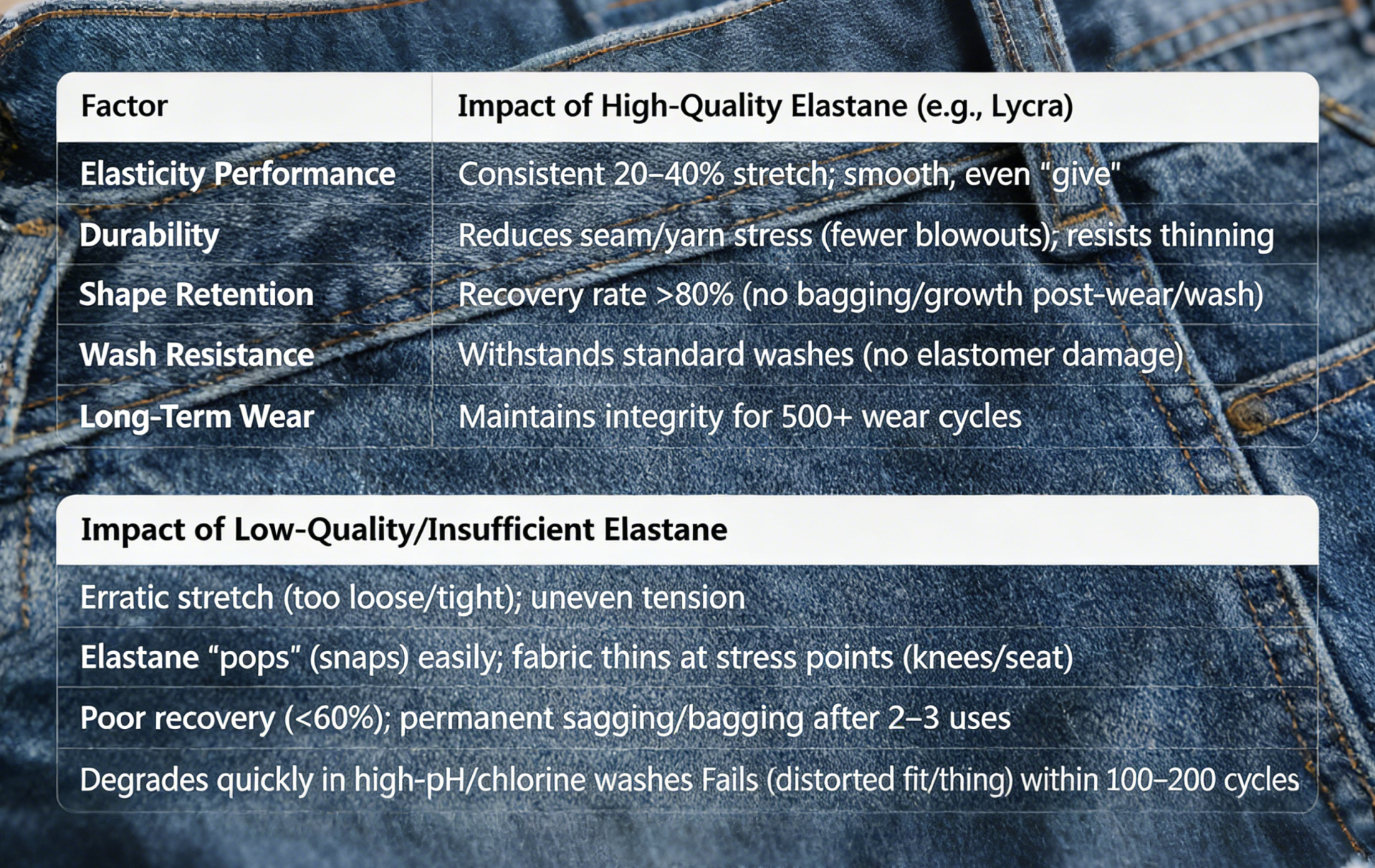
The Elasticity–Shape Retention Trade-Off in High-Stretch Denim
Why >90% Elastic Recovery Is Critical for Long-Term Fit Integrity
For high stretch jeans to keep their shape over time, they need to bounce back pretty well after being stretched out. When denim falls below about 90% elastic recovery, those constant stresses around the knees and butt area start causing problems. The fabric actually grows permanently, sometimes stretching an extra 15% or more after just 30 wears. What happens next? Baggy spots, sagging where it shouldn't, and all sorts of weird proportions that ruin how the jeans look and fit. Lab tests tell us something interesting too. Denim that gets between 92 and 95% recovery can handle over 20 thousand stretches before showing much wear and tear. But if it's under 85%, most samples won't even meet basic industry standards after only 5 thousand stretches. Getting past that 90% mark really matters because it stops what we call "stretch fatigue." This means longer lasting jeans and fewer people tossing them out early, which obviously helps cut down on all that wasted fabric ending up in landfills.
Fabric Growth vs. Dimensional Stability: What ASTM and ISO Tests Reveal About High-Stretch Denim Performance
When it comes to high stretch denim, fabric growth (that's when it stretches permanently) and dimensional stability (how well it resists shrinking) are basically at odds with each other. The ASTM D3107 standard measures fabric growth by putting samples through repeated stretching cycles of about 30% elongation. This tells manufacturers how well their denim holds its shape after being stretched repeatedly during normal wear and washing. The best performing fabrics typically show less than 4% permanent stretch even after going through 10,000 of these cycles because they use better elastane placement and smarter yarn construction techniques. On the other side of things, the ISO 5077 standard looks at how much denim shrinks during regular washing. Most quality high stretch denims will only shrink around +/- 1.5% after five wash cycles according to industry tests. For denim that really stands out, it needs to pass both these tests simultaneously: staying below 5% growth per ASTM standards while keeping dimensional changes within +/- 2% as measured by ISO. These specifications ensure the jeans stay comfortable without losing their original fit over time.
How Elastane Content Impacts the Durability of High-Stretch Denim
Tensile Strength Erosion: Why >2% Elastane Accelerates Wear at Stress Points
The amount of elastane in fabric really affects how well it holds up over time. When there's more than 2% synthetic fiber mixed in, those areas where cotton stretches repeatedly start showing weaknesses. Look at places like the knees, thighs, and bottom area of jeans - these spots tend to wear out faster when too much elastane is present. Tests have shown that denim containing 3 to 5% elastane actually loses around 40% more strength after being stretched 50 times compared to fabrics with just 1 to 2% elastane. What happens is that the elastic properties break down gradually through each stretch cycle, leading to problems we can see clearly: baggy knees forming, waistbands that droop down, and the overall shape of the garment starting to look sloppy instead of neat. For this reason, most manufacturers find that keeping elastane content low provides a better mix between flexibility and durability in their products.
Martindale Rub Test Data: High-Stretch Denim Versus Traditional Denim Under Abrasive Stress
When it comes to how well different denims hold up over time, Martindale tests show there's quite a difference between regular and stretchy options. Regular old 100% cotton jeans can usually last around 25k to 30k rubs before showing signs of wear, but those fancy stretch denims with about 5% elastane tend to give out much quicker, often failing somewhere between 12k and 15k cycles. That means they wear out almost half as fast. The problem is that elastane just doesn't stand up to friction like cotton does. These tiny tears start forming in the fabric and then get worse over time, leading to those annoying holes on thighs and loose threads coming out of seams that everyone hates.
| Denim Type | Avg. Martindale Cycles | Failure Mode |
|---|---|---|
| Traditional (100% cotton) | 28,000 | Gradual fiber thinning |
| High-Stretch (5% elastane) | 14,000 | Elastane snap + pilling |
This inverse relationship between elasticity and abrasion resistance defines a core engineering challenge—one manufacturers address not by reducing stretch, but by rethinking how it's delivered.
Innovations That Enhance Both Elasticity and Longevity in High-Stretch Denim
Lycra® Xfit and Dual-Core Yarns: Engineering Sustained Recovery Without Sacrificing Strength
Dual core yarns tackle the problem where clothes either stretch too much or wear out quickly by putting an elastane core inside a protective layer made of cotton or polyester. The way these are built protects the stretchy part from getting worn down and spreads out the stress better across the whole fabric compared to regular single core designs that let the elastane get damaged faster. When manufacturers use top quality elastane materials such as Lycra Xfit, these special yarns maintain around ninety percent of their stretchiness even after lots of wear and tear, plus they help prevent those annoying bulges that form at knee and thigh areas. What we actually see in practice is clothing that keeps its shape for longer periods not merely because it stretches well initially, but because it maintains its strength over time too.
Reinforced Stress Zones and Hybrid Weave Structures for Wear-Resistant High-Stretch Denim
The real boost in durability comes from smart placement rather than making everything the same throughout. Think about hybrid weaving methods that pack in tougher, wear-resistant twill patterns exactly at spots that get the most action like knees and seat areas, but still keep the rest of the fabric nice and stretchy. These reinforced sections can handle about two to three times more rubbing tests compared to regular woven fabrics. Other tricks help too bond tapes together and work elastane fibers both ways across the material which keeps seams stable and stops things from stretching out of shape all while keeping that flexible feel intact. All put together, these approaches let stretchy jeans bend and move through daily use exceeding 30 percent extensions regularly without losing their shape or looking worn down after repeated wear.
FAQ
What is elastic recovery in denim?
Elastic recovery refers to the ability of denim fabric to return to its original shape after being stretched. High elastic recovery ensures long-term shape retention and prevents sagging or bagging.
Why is elastane content important in high-stretch denim?
While elastane provides stretchiness, excessive elastane can weaken the fabric, especially at stress points. Balancing elastane content with other fibers helps ensure both flexibility and durability.
What are dual-core yarns?
Dual-core yarns consist of an elastane core surrounded by a protective layer, enhancing both stretchability and strength, thereby increasing the durability of high-stretch denim.