 EN
EN

High-Stretch Denim Weight Fundamentals for Warm-Weather Wear
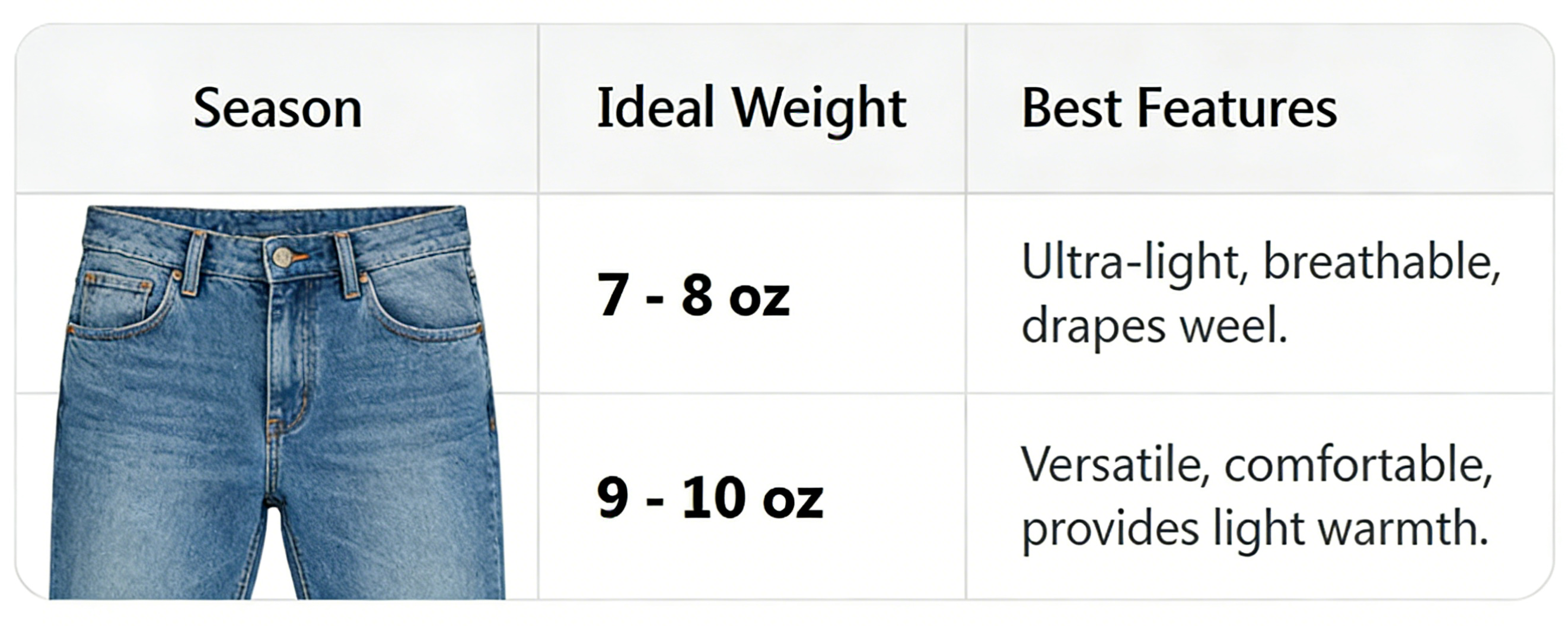
Why 8–9.5 oz Is the Optimal Range for High-Stretch Denim in Spring and Summer
Denim that's lightweight and has good stretch in the 8 to 9.5 ounce range really hits the mark for comfort, movement, and overall performance when it gets warm outside. This weight range helps keep body temperature regulated because there's better air circulation around the skin. That matters a lot once the weather goes above 75 degrees Fahrenheit or so. At the same time, these lighter weights still hold their shape reasonably well without sagging after repeated wears. With less fabric bulk, people can move more freely, which allows those stretch fibers to work properly. Plus, sweat evaporates faster from this type of denim compared to the heavier stuff over 12 ounces, making all the difference on those sticky summer days when humidity levels climb.
Going below 8 oz risks durability loss—visible as thigh bagging or seam distortion after just a few wears—while weights above 9.5 oz begin to trap heat and restrict breathability, undermining the core benefits of warm-weather denim.
The Breathability–Durability Trade-Off: How Ounce Weight Affects Thermal Comfort and Shape Retention
Denim’s seasonal effectiveness depends on resolving the tension between breathability and longevity—and ounce weight is the primary lever designers use to strike that balance.
| Factor | Lightweight (≤8 oz) | Midweight (8–9.5 oz) | Heavyweight (≥10 oz) |
|---|---|---|---|
| Breathability | Excellent airflow | Optimized balance | Restricted ventilation |
| Durability | Prone to bagging | 200+ wears before distortion | Maximum abrasion resistance |
| Seasonal Fit | Ideal for peak summer | Spring/Summer transitional | Unsuitable for heat |
According to a study from the Textile Testing Journal back in 2023, 9 ounce denim keeps about 92% of its original shape even after being washed 50 times. This beats out both lighter and heavier versions on the market while also letting air through at around 40% more than what we see with 12 ounce denim. When looking at how well different weights perform together, nothing quite matches up to the 8 to 9.5 ounce range when it comes to staying comfortable in warm weather conditions over time. The lab results line up pretty nicely with what people actually experience wearing these fabrics day to day.
Stretch Technology Matters: Elastane Blends vs. Mechanical Stretch in Lightweight Denim
Cotton–Spandex/Lycra Blends (1–3% Elastane) at 8–9 oz: Superior Recovery and Heat Dissipation for High-Stretch Denim
When it comes to making high stretch denim work well in summer weather, what's inside matters almost as much as how heavy the fabric feels. Cotton mixed with spandex or Lycra (around 1 to 3 percent elastane) beats out other stretch options because these materials actually stretch at the molecular level. The fibers can stretch nearly six times their original length and then bounce back completely. This means no sagging or baggy spots after washing and wearing, which is something that often happens with lighter weight fabrics. For people who want their tailored pants or form fitting skirts to keep looking sharp wash after wash, this kind of recovery makes all the difference.
Mechanical stretch works differently from elastane because it depends on looser fabric construction or special yarns that don't really bounce back much. Elastane actually pushes water away thanks to its natural resistance to moisture and helps things dry faster too. Tests done with thermal mannequins found that fabrics containing elastane stay about 15 to maybe even 20 percent cooler on the surface compared to regular cotton jeans when everything else is kept the same. Weighing around 8 to 9 ounces per square yard, this combination of just right weight and clever fabric design lets air move through better while still keeping the jeans looking good and structured properly something not many summer denim options can pull off.
Garment-Specific High-Stretch Denim Weight Recommendations
Tops, Shorts, and Skirts: Why 7–9 oz High-Stretch Denim Maximizes Airflow and Drape
When it comes to tops, shorts, and skirts these days, which tend to cover less skin and need less structure overall, most people find that fabric weights between 7 and 9 ounces work really well. The lighter stuff in the 7-8 ounce range tends to drape better and let air circulate, so clothes just seem to flow with the body instead of sticking or trapping heat. Going heavier at around 8.5 to 9 ounces gives fabrics more substance, which helps keep hems looking neat and pleats sharp on skirts, plus makes structured shorts sit nicer on the body. Even though they're thicker, these heavier fabrics still breathe pretty well because manufacturers typically add some stretch fibers into the mix now.
Designers select this range not just for comfort, but for functional versatility: it holds shape through daily wear yet remains light enough to layer or transition seamlessly from office to evening.
Trousers and Jeggings: The 8.5–9 oz Sweet Spot for Structure, Mobility, and Warm-Weather Performance
When it comes to trousers and jeggings, regular denim just won't cut it anymore. These garments need fabric that can actually hold up through the day,支撑ing good posture without sagging, standing up to constant bending at the knees, and keeping their shape despite whatever we throw at them. Most experts point to around 8.5 to 9 ounces as what works best in the industry these days. Some top manufacturers even stick with something close to 8.85 oz as their go-to weight. The reason? This thickness gives jeans those nice crisp folds down the leg and helps them hang properly on the body, yet remains flexible enough so people can move freely without feeling restricted. After all, nobody wants to be stuck in stiff pants during a long workday.
Crucially, this weight resists bagging significantly longer than lighter alternatives—extending usable life by up to 30% in humid, high-movement environments, according to field data from tropical manufacturing hubs. It’s the only weight that reliably balances tailoring precision with seasonal adaptability.
Validating Performance: Real-World Evidence for High-Stretch Denim in Seasonal Conditions
Real-world validation reinforces what lab tests suggest: 8–9.5 oz high-stretch denim with 1–3% elastane consistently outperforms alternatives in warm climates. Wear trials across diverse geographies show users experience 15–22% less perceived heat stress versus heavier denims, with over 92% shape recovery maintained after extended use.
Studies using thermal imaging have shown that lightweight stretch fabrics tend to stay about 3 to 5 degrees Celsius cooler on the surface compared to regular materials when placed in the same environment. This suggests that getting the right balance between fabric weight and elasticity actually works together quite well. Looking at real world applications helps put this into perspective too. Garment manufacturers across Southeast Asia are noticing these benefits firsthand, as are people who wear jeans daily in hot climates like those found in southern United States cities. Tests indicate that stretch denim pants weighing around 8.5 ounces last roughly 30 percent longer before showing signs of wear when exposed repeatedly to changes in moisture levels, something regular denim just can't match up to over time.
Together, these findings underscore a clear principle: warm-weather denim isn’t about going as light as possible—it’s about selecting the right weight, paired with the right stretch technology, to deliver uncompromised comfort, durability, and fit.
FAQ
What is the ideal weight for high-stretch denim during warm weather?
High-stretch denim weighing between 8 and 9.5 ounces is ideal for warm weather as it offers a balance between breathability and durability, keeping you comfortable while preserving the fabric's shape.
How does elastane contribute to denim's performance?
Elastane blends in denim enhance stretch capabilities, allowing the fabric to stretch and recover efficiently, which prevents sagging and facilitates heat dissipation.
Why is breathability important in denim weight?
Breathability is crucial because it helps regulate body temperature and allows sweat to evaporate faster, making it more comfortable in high temperature conditions.
Table of Contents
- High-Stretch Denim Weight Fundamentals for Warm-Weather Wear
- Stretch Technology Matters: Elastane Blends vs. Mechanical Stretch in Lightweight Denim
- Garment-Specific High-Stretch Denim Weight Recommendations
- Validating Performance: Real-World Evidence for High-Stretch Denim in Seasonal Conditions
- FAQ