 EN
EN

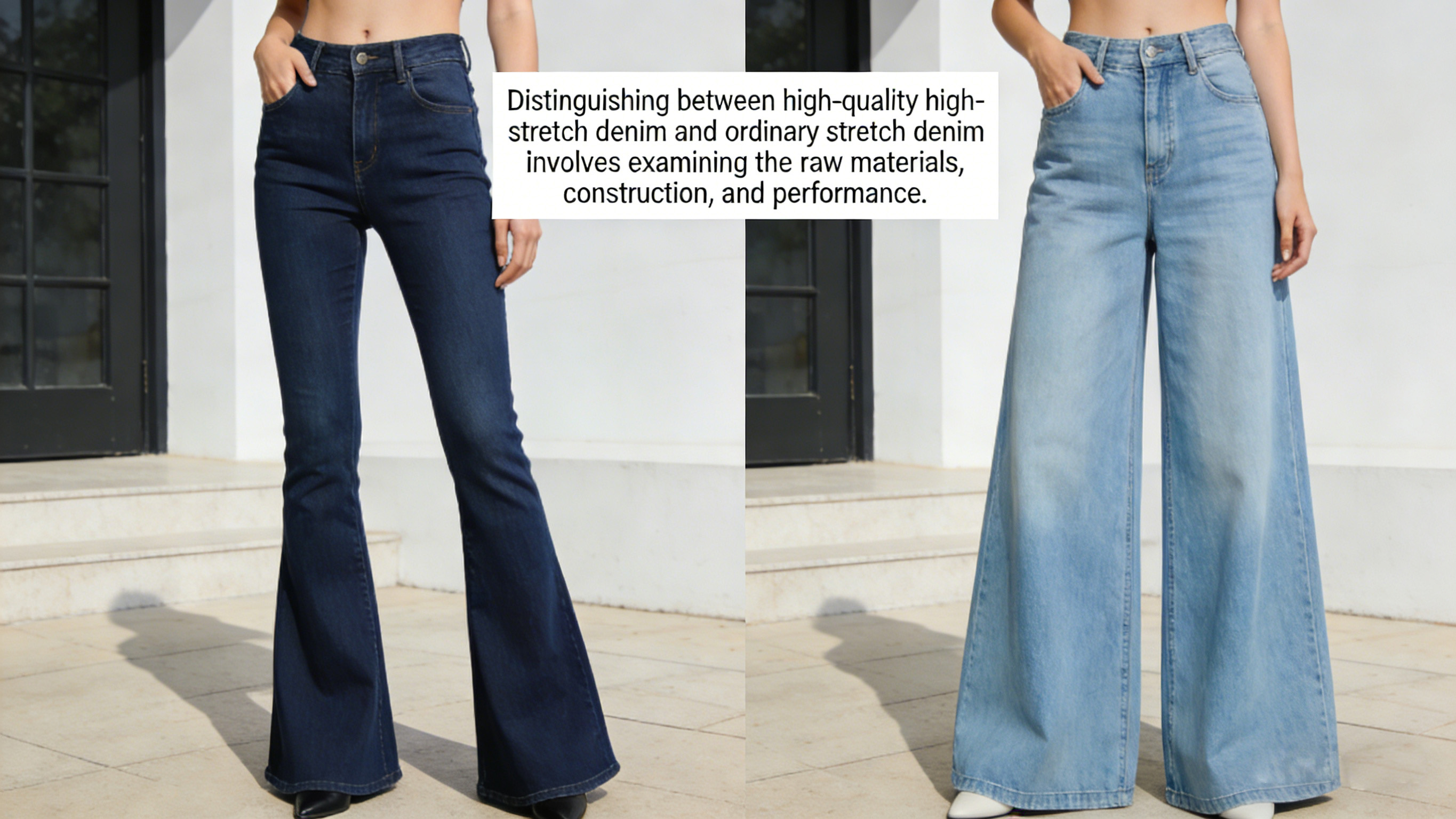
Material Composition: Why Elastane Type and Percentage Define True High-Stretch Denim
Cotton–Elastane vs. Polyester-Blended Systems: Breathability, Recovery, and Long-Term Elasticity
The secret behind high stretch jeans lies in how elastane gets woven in, though what matters most for lasting quality is actually the main fabric used. Cotton mixed with elastane (usually around 92 to 98 percent cotton) does really well when it comes to letting air through and slowly bouncing back shape, so these fabrics tend to conform nicely to bodies as people move throughout their day. The pores in cotton itself help circulate air better than other materials do, which means less sweating and overheating even when worn all day long. Polyester blends tell a different story altogether. These fabrics definitely snap back quickly after stretching, but at the cost of keeping things cool and holding up over time. They tend to get hot inside, start developing those annoying little pills from rubbing against surfaces, and lose their stretchiness pretty fast once washed multiple times. According to some tests done by the Textile Institute last year, cotton-elastane mixes still keep about 95% of their stretchiness after fifty wash cycles, whereas polyester versions can drop down to just 60% of original flexibility after similar treatment.
The 2–6% Elastane Sweet Spot: Balancing Flexibility, Shape Retention, and Fabric Integrity
Industry-wide performance data confirms 2–6% elastane as the functional ceiling for authentic high-stretch denim. Below 2%, stretch is insufficient for dynamic movement; above 6%, structural integrity erodes—evident in premature bagging at knees and seam failure. At 4% elastane, denim delivers optimal synergy:
- Dynamic flexibility: Full 360° stretch without resistance
- Shape retention: 98% recovery after 12 hours of continuous wear
- Durability: Withstands 20,000+ abrasion cycles without fiber breakdown
Concentrations exceeding 6% (e.g., 8–12%) inflate short-term compression at the cost of longevity—increasing tear risk by 70% in high-stress zones like pockets and inner thighs. This precision range ensures lasting comfort and structure—no compromise required.
Fabric Construction: Weight, Weave Density, and Structural Resilience in High-Stretch Denim
12–14 oz Denim vs. Lightweight Alternatives: Durability Trade-Offs Without Sacrificing Mobility
Denim in the 12 to 14 ounce range hits that perfect balance point for stretchy jeans. It's thick enough so they won't wear out easily and keep their shape after multiple washes, but still soft enough to bend and flex with normal movement. Heavyweight denim above 14 ounces tends to be stiff and uncomfortable, whereas this middle ground works well because manufacturers can add some elastane fibers and use a looser twill pattern. The result? Jeans that move around just like the lighter 9-11 ounce versions do, but stand up to daily wear much better. Tests done by third parties have actually confirmed that fabrics falling within this weight category perform exceptionally well when it comes to both comfort and durability factors.
- 30% higher tensile strength than sub-12 oz stretch denim
- Equivalent stretch response during motion capture analysis
- Markedly reduced knee bagging due to balanced yarn density and recovery
Crucially, thread count—not just weight—drives performance: 70–85 threads per square inch reinforce the twill structure without stiffening the hand feel. This calibrated construction extends garment lifespan by 18–24 months under typical wear, all while preserving the ease of movement expected from premium stretch denim.
Real-World Performance Testing: Simple Yet Reliable Ways to Evaluate High-Stretch Denim
The Pull-and-Hold Test, Light Transmission Check, and Texture Assessment for Instant Recovery Feedback
You don't need a lab to assess high-stretch denim—three tactile, repeatable field tests reveal what matters most: real-world recovery and structural integrity.
Pull-and-hold test: Stretch a 4-inch section widthwise for 10 seconds. Premium denim rebounds fully within 1–2 seconds with no visible distortion. Sluggish or incomplete recovery signals weak elastane bonding or degraded fiber integrity.
Light transmission check: Hold the fabric taut against a bright light source. High-quality high-stretch denim blocks ¥90% of light—indicating tight, consistent weave density. Excessive transparency points to loose construction or thin yarns prone to stretching out.
Texture assessment:
- Rub the surface firmly: Pilling or excessive fuzz reveals poor fiber cohesion or low-twist yarns
- Inspect dye uniformity: Streaking or uneven saturation suggests inconsistent finishing that compromises long-term colorfastness
- Fold and release: Deep, persistent creases indicate inadequate recovery—especially concerning around high-flex zones like knees and seat
These methods align directly with ISO 5077 dimensional stability protocols and reliably identify denim engineered to retain shape across 50+ wear cycles—far more predictive than subjective “knee puffing” demonstrations.
Certified Durability: How Industry Standards Validate High-Stretch Denim Claims
AATCC 132 & ISO 5077 Testing vs. Unverified 'Knee Puffing' Simulations
When talking about real performance claims, we need to look at standardized testing from independent labs instead of just stories or simulated results. Take AATCC 132 for instance, which is run by the American Association of Textile Chemists and Colorists. This test actually checks how well colors hold up during dry cleaning and regular washing cycles, so manufacturers know their dyes won't fade when customers put them through normal wear and tear. Then there's ISO 5077 that looks at how fabric holds its shape after being stretched thousands of times in controlled settings using proper equipment. For premium stretch denim that meets these standards, most brands report around 90% shape retention even after all that testing. That means jeans made to these specs really do keep their fit over time, something anyone who owns a pair knows makes all the difference in comfort and appearance day after day.
The strictness of proper testing is totally different from those casual "knee puffing" tests people sometimes do. These informal checks are basically random, without any real calibration, and they miss all sorts of important factors such as how consistent the tension remains, what happens to the fibers over time, and how moisture affects everything. Yeah, these flashy displays might look impressive at first glance, but honestly they tell us nothing concrete about how durable the material actually is, how well it bounces back after stretching, or if it will still fit properly months down the road. When brands get third party certifications, it's not just about checking off marketing claims either. What matters most is whether the jeans really hold up under normal conditions once someone starts wearing them regularly, doing laundry, going through daily life stuff.
FAQs About High-Stretch Denim
What percentage of elastane is best for high-stretch denim?
Industry standards suggest that 2-6% elastane is optimal for high-stretch denim, balancing flexibility, shape retention, and fabric integrity.
Why is cotton-elastane preferred over polyester blends?
Cotton-elastane blends allow better breathability and retain stretch longer than polyester blends, which can become hot and lose elasticity quicker after multiple washes.
How does denim weight affect durability and mobility?
A weight range of 12-14 ounces for denim offers a balance between durability and comfort, allowing flexibility without sacrificing longevity.
What are reliable tests to evaluate high-stretch denim?
The pull-and-hold test, light transmission check, and texture assessment instantly reveal real-world recovery and structural integrity of high-stretch denim.
Table of Contents
- Material Composition: Why Elastane Type and Percentage Define True High-Stretch Denim
- Fabric Construction: Weight, Weave Density, and Structural Resilience in High-Stretch Denim
- Real-World Performance Testing: Simple Yet Reliable Ways to Evaluate High-Stretch Denim
- Certified Durability: How Industry Standards Validate High-Stretch Denim Claims
- FAQs About High-Stretch Denim